Can one pair of hands give every brand its own voice, without ever raising hers?
Keep reading. The answer has forty eight names, four of them whispered.
01 / Contents
What's in here.
A monograph in four parts. The practice, the work, the person, the way in.
A book of forty four names, four withheld, two countries, and one very busy studio.
This is a working document, not a static one. It opens with a letter, settles into twelve selected projects and a thirty three brief archive, and closes with the practical detail you'd usually have to email to ask for.
A short note about what I do, why this document exists, and what to look for as you read.
Marginalia
"Most brand work is just writing, with pictures kept honest."
Written
Dubai, July 2026.
Drafts
11①
Here’s a thing nobody tells you: brands rarely die loudly. They die of noise. A little more shouting every quarter, until nobody can hear them at all.
I’ve spent nine years betting the other way. Quiet, specific, patient work for LG, JW Marriott, Don Julio, Teacher’s, and thirty three more names you’ll meet inside. These days six brands in Dubai live by that bet, and most of their names I can’t even tell you.
So this book asks one question. Can one pair of hands give every brand its own voice, without ever raising hers? You’ll have the answer by the last page. I take on two projects at a time, and I write back to everyone.
The numbers, because someone always wants them. Each one cites where in this document it's supported.
6
Distinct brand identities running in parallel. Construction, engineering, accounting, AI, automotive, and fire safety.
Current, Silver Crown Group.
§ 05
50+
Design assets shipping per month across the six brands. Social, campaign, print, video, microsite.
Month in, month out.
§ 05.4
3×
Inbound demo requests against the internal launch target. SPAI, launched 2025.
Measured at launch.
§ 05.5
0
External agency hours used across the current group portfolio. Full single studio execution since Q1 2025.
Standing record.
§ 05.5
Premium forLG · JW Marriott · Don Julio · Teacher’s
CurrentlyRunning six brands, Silver Crown Group
ClusterSix brands, six industries
BasedDubai, UAE
PastLBB / Nykaa · CredAster
LanguagesEnglish · Hindi · Punjabi
Premium forLG · JW Marriott · Don Julio · Teacher’s
CurrentlyRunning six brands, Silver Crown Group
ClusterSix brands, six industries
BasedDubai, UAE
PastLBB / Nykaa · CredAster
LanguagesEnglish · Hindi · Punjabi
04 / The index
Selected work, 2020 to today.
Twelve projects across two countries. Hover any row to peek at the cover. The two starred entries open in full case form below; case one carries the archive, thirty three briefs deep.
A four month stretch in 2024 running end to end campaign design at LBB, a Nykaa owned lifestyle media and creative shop in India. The brief in plain English: dress up some of the loudest premium names in their categories, and don't make any of them look like the others.
★ Featured
ViaLittle Black Book, a Nykaa company. India based lifestyle media and creative platform that builds campaigns for premium consumer brands.
Scope I ledEnd to end campaign design. Microsite, social, print, the whole kit. Responsible designer on every brief.
The stretchApril to August 2024. End to end on every brief, partnered with content and dev teams.
Loud names, quiet hands.
№ 01 / Premiumfolio 14 →
The brief
The clients on the table would each normally get their own team. LG. JW Marriott. Don Julio. Teacher’s. Global identities already in place, campaigns that had to land in India without arguing with them. I worked each end to end, and the thread was the same: do the loud thing quietly.
And yes, it was frightening. Four global names, one desk, seventeen weeks. You learn quiet fast when the room is that loud.
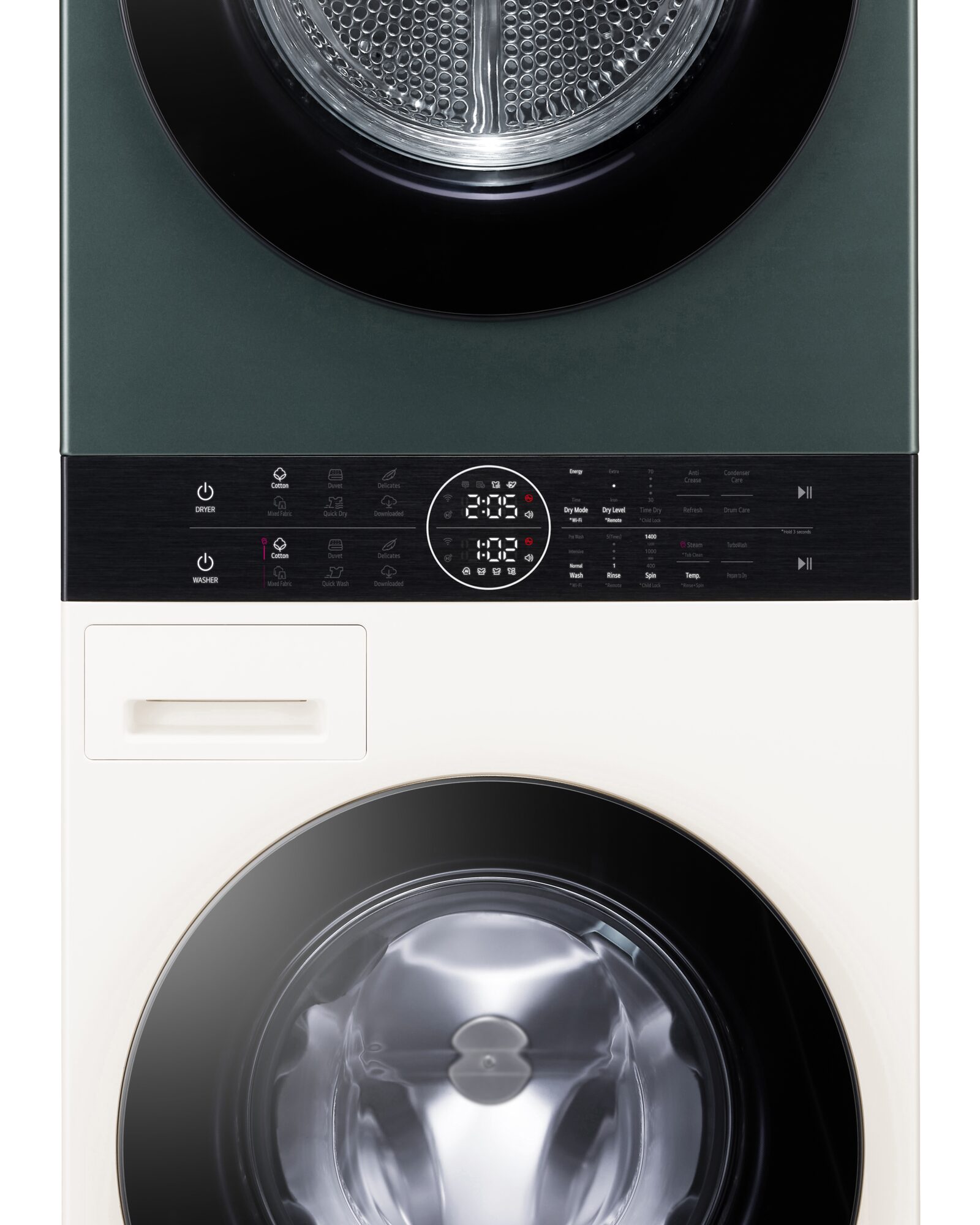
Hero. Mosaic of all four campaign hero frames.shipped
04.1 · The clients
Four names. Four different kinds of quiet.
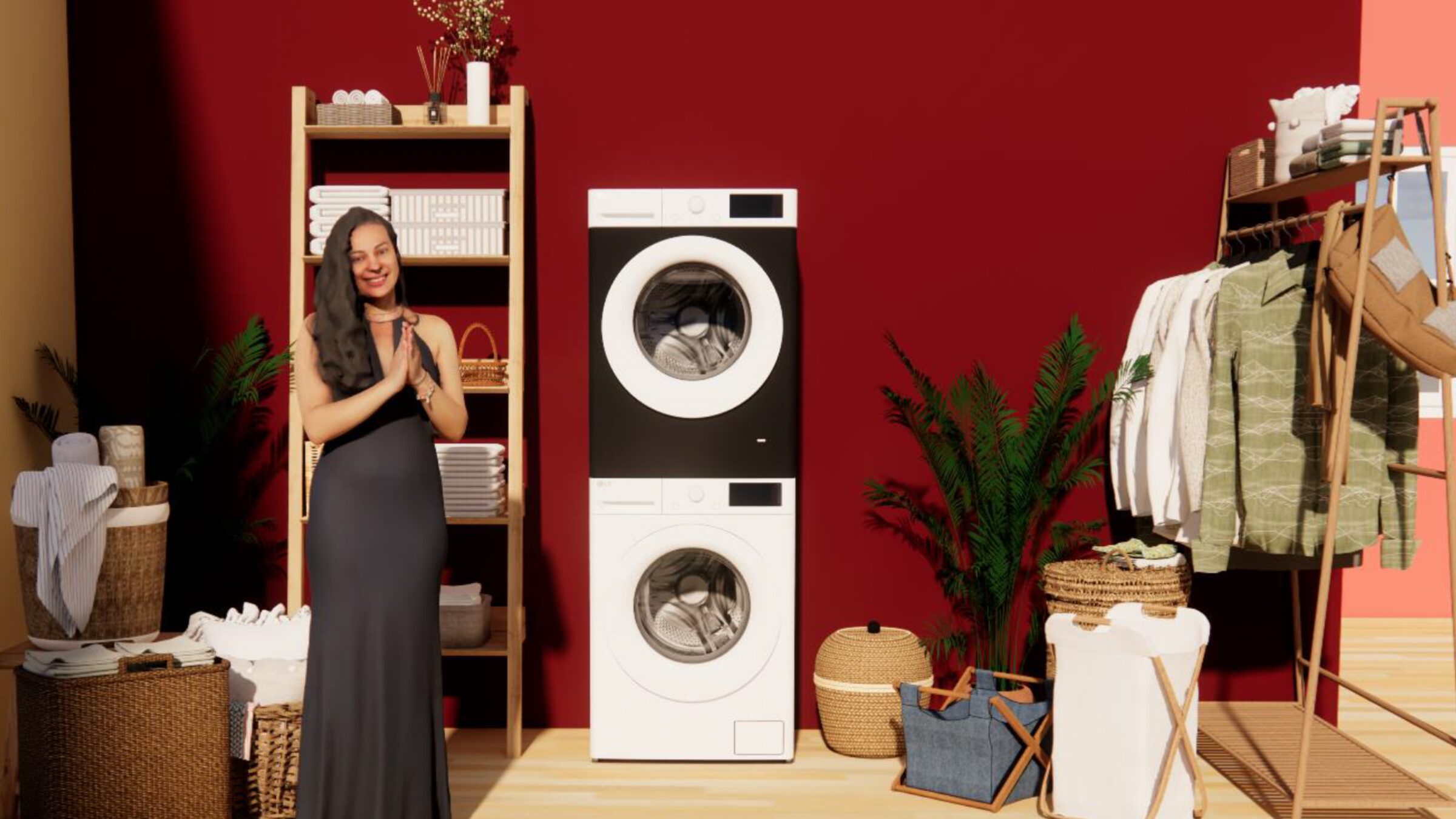
Client 01. South Korean conglomerate. Founded 1947 in Seoul by Koo In-hwoi as Lucky Chemical. Renamed LG in 1995 and given the “Life’s Good” tagline in 2004.
LG.
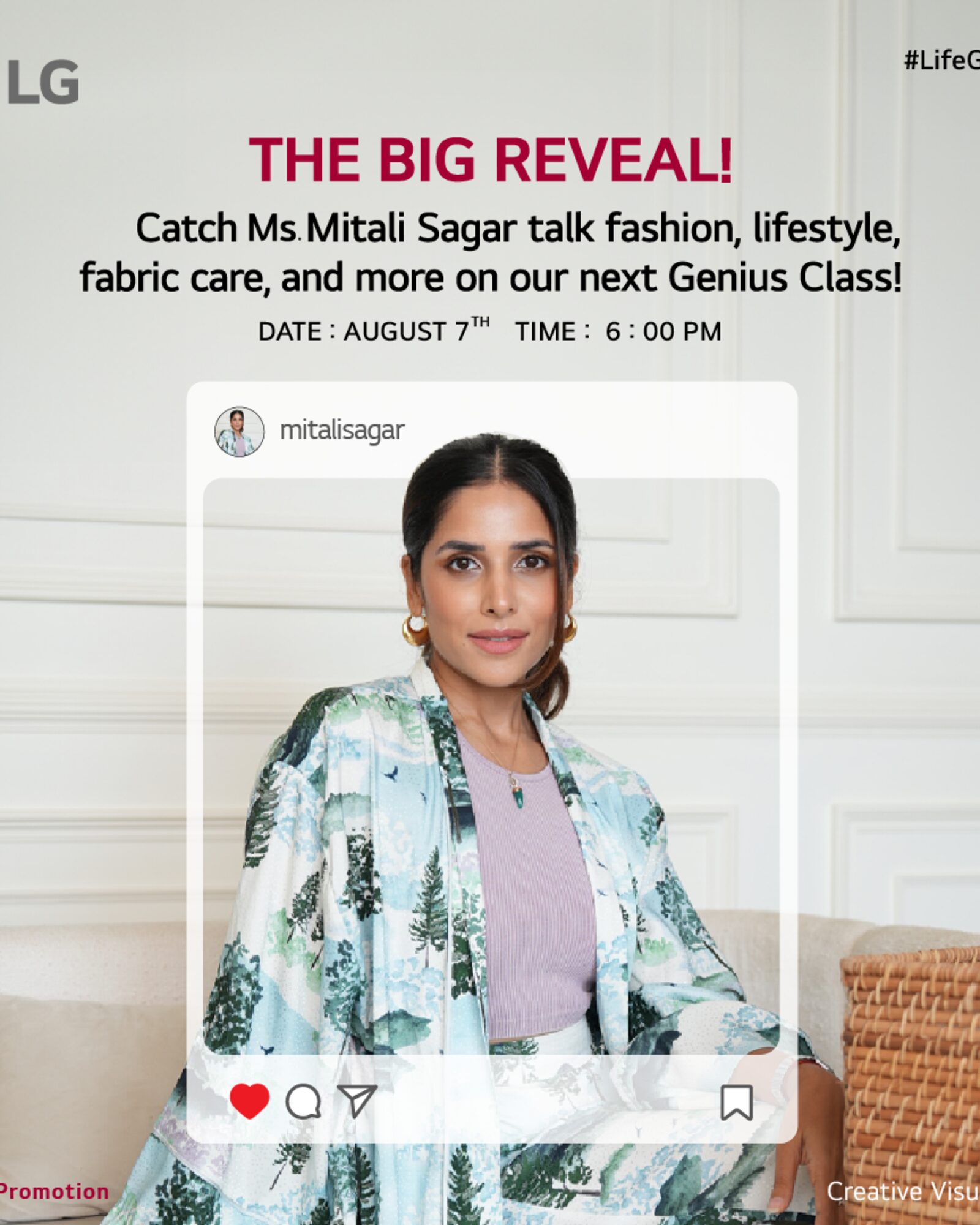
A product microsite tied to a launch cycle. India market. 2024.
The product brief came in with a tight scope and a tighter timeline. I built the microsite around the single argument the product needed to make, and it outperformed its control. The result won the desk the next brief, and the one after that.
Sector
Consumer electronics
Format
Microsite + social
Outcome
+30% engagement
Hands
Responsible designer
LG microsite. Hero frame at full bleed.shipped
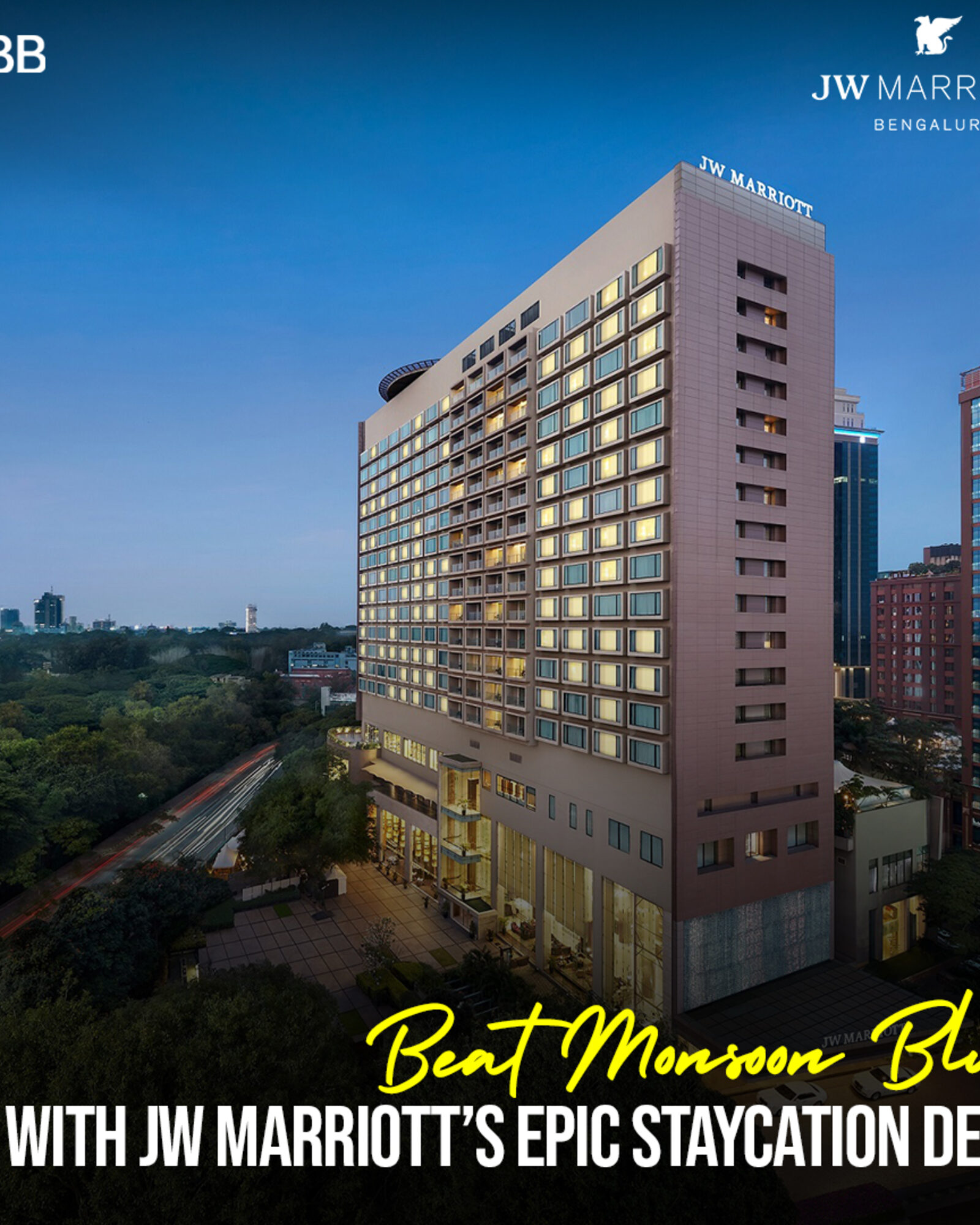
JW Marriott. Editorial spread for India campaign.shipped
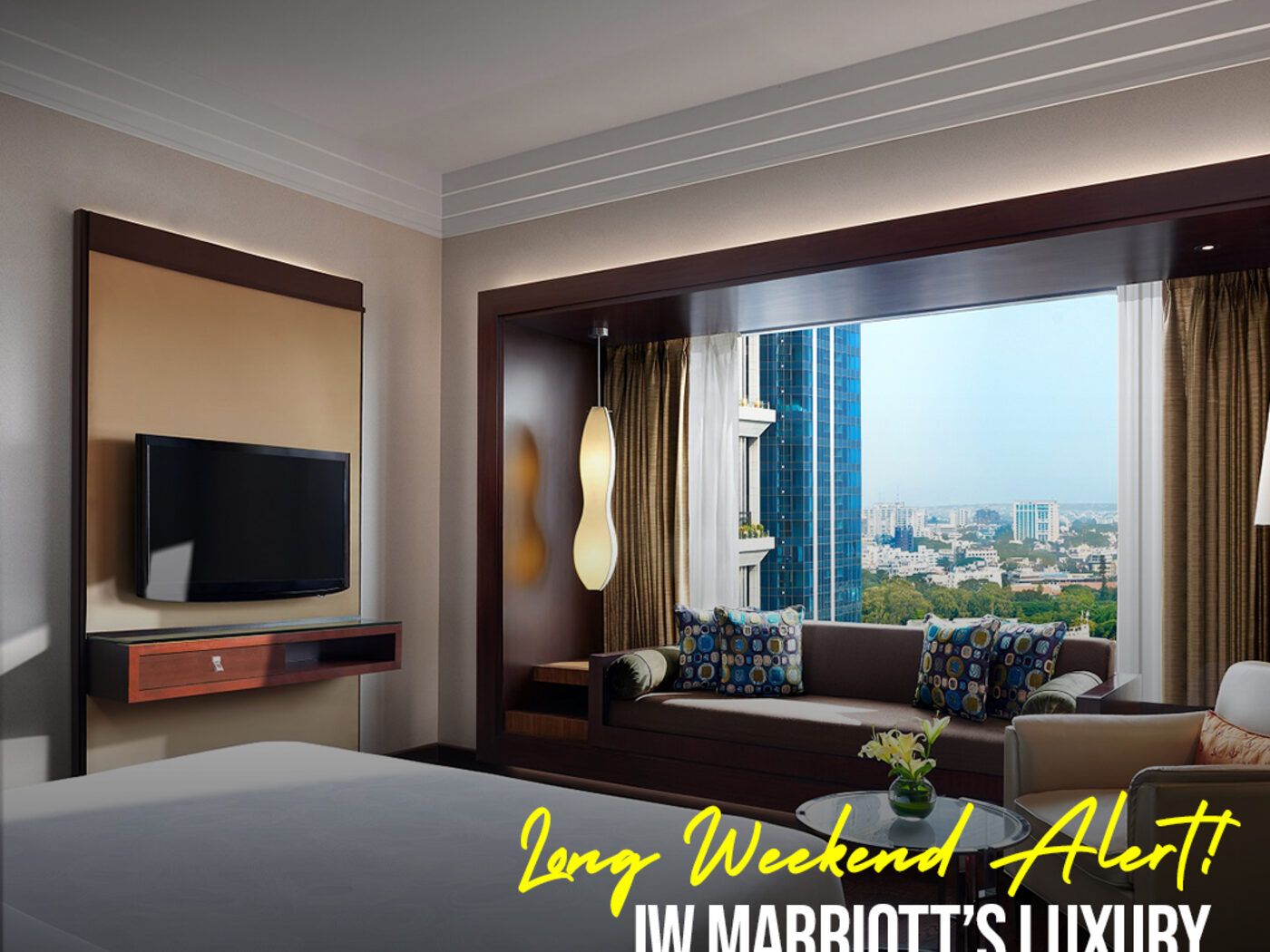
Client 02. Luxury hotel sub brand of Marriott International, named for company founder J. Willard Marriott. Over a hundred properties globally.
JW Marriott.
Editorial print and social for an India property’s seasonal campaign. 2024.
Luxury hospitality wants design that behaves the way a good room does. I built the seasonal India campaign as a small editorial system: one typographic voice, one photographic register, one rhythm of full bleed image and white margin, with print and social pulling from the same rules.
Sector
Luxury hospitality
Format
Editorial print + social
Tone
Composed
Role
Campaign designer
Client 03. Often called the world’s first luxury tequila. Distilled in the Jalisco highlands of Mexico since 1942 by Don Julio González. Owned by Diageo.
Don Julio.
An editorial film treatment and campaign visuals for an India launch moment. 2024.
The art direction borrowed more from food editorial than from drinks advertising, which gave it room to breathe. Mood and palette came from the bottle and the agave fields, the pacing stayed slow, and the system carried into social cutdowns and event collateral without losing the register.
Sector
Premium spirits
Format
Film + campaign + event
Palette
Agave / amber
Role
Campaign designer
Don Julio. Editorial film still, opening frame.shipped
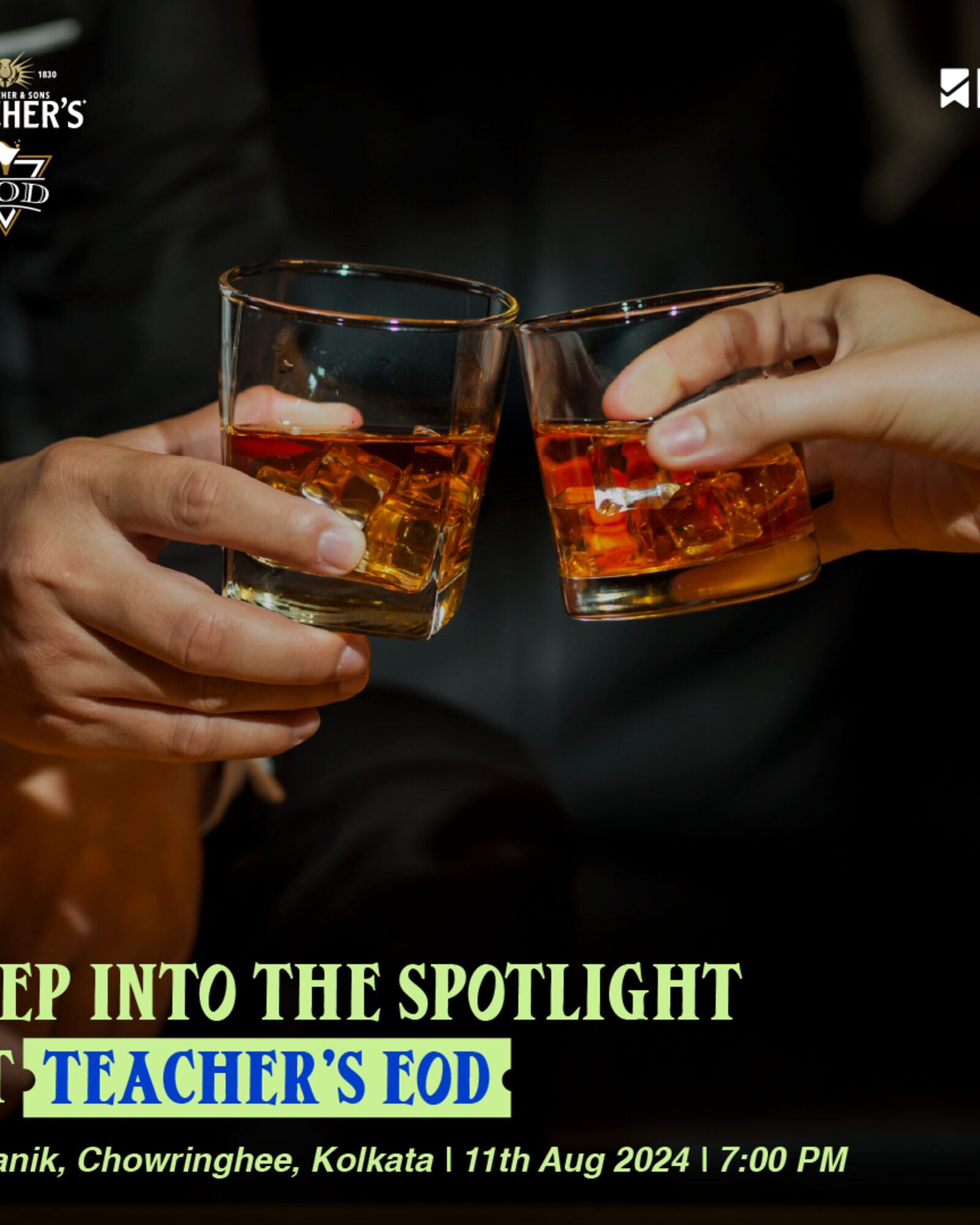
Client 04. Blended Scotch whisky out of Glasgow. William Teacher started selling whisky in 1830 and the Highland Cream blend was registered in 1884. Now part of Suntory Global Spirits.
Teacher’s.
A limited edition campaign run for the India market. 2024.
The brief asked for a nod to the brand’s age without the obvious Scottish cues, so the campaign hung on type and material instead: edition numbers, stamps, ledger lines. The vocabulary a brand born in 1830 has actually earned.
Sector
Blended whisky
Format
Limited edition print
Anchor
Archive / ledger
Role
Campaign designer
04.2 · In the wild
Across four months, five surfaces.
LG. Microsite hero, kinetic type loop.surface 01
LG × LBB
Microsite, 2024
JW Marriott. Print, full bleed.surface 02
JW Marriott
Print + social
Don Julio. Film still 01.surface 03
Don Julio
Editorial film
Teacher’s. Limited edition.surface 04
Teacher’s
Limited edition
LBB Editorial. Feature splash.surface 05
LBB Editorial
Feature splash
Cross platform kit. Brand system across touchpoints.surface 06
Platform kit
The whole kit
04.2 / Featured highlight
The microsite that went 30% up.
A focused product microsite for an LG campaign. Minimal art direction, fast type, slow imagery, built end to end as the responsible designer on the brief. It lived for a single campaign cycle and outperformed its control on engagement by a margin wide enough to win the next brief.
30%
Increase in user engagement post launch. (measured vs. control, 2024)
Microsite. Hero frame at full bleed.shipped
A premium brand’s most useful trait is that it can afford to be quiet.
Note pinned to studio wall, LBB, April 2024
04.3 · Outcomes
What got shipped.
4
Premium brands shipped in 4 months
37
Briefs shipped from one desk in four months
5
Distinct campaign systems (LG, JW, Don Julio, Teacher’s, LBB Editorial)
1
Designer on each brief. End to end.
04.4 · The archive
One desk. Thirty three more briefs.
The rest of the book
The four names above were the loudest briefs, not the only ones. Every tile below is a shipped creative from the same 2024 desk, pulled straight from the working files.
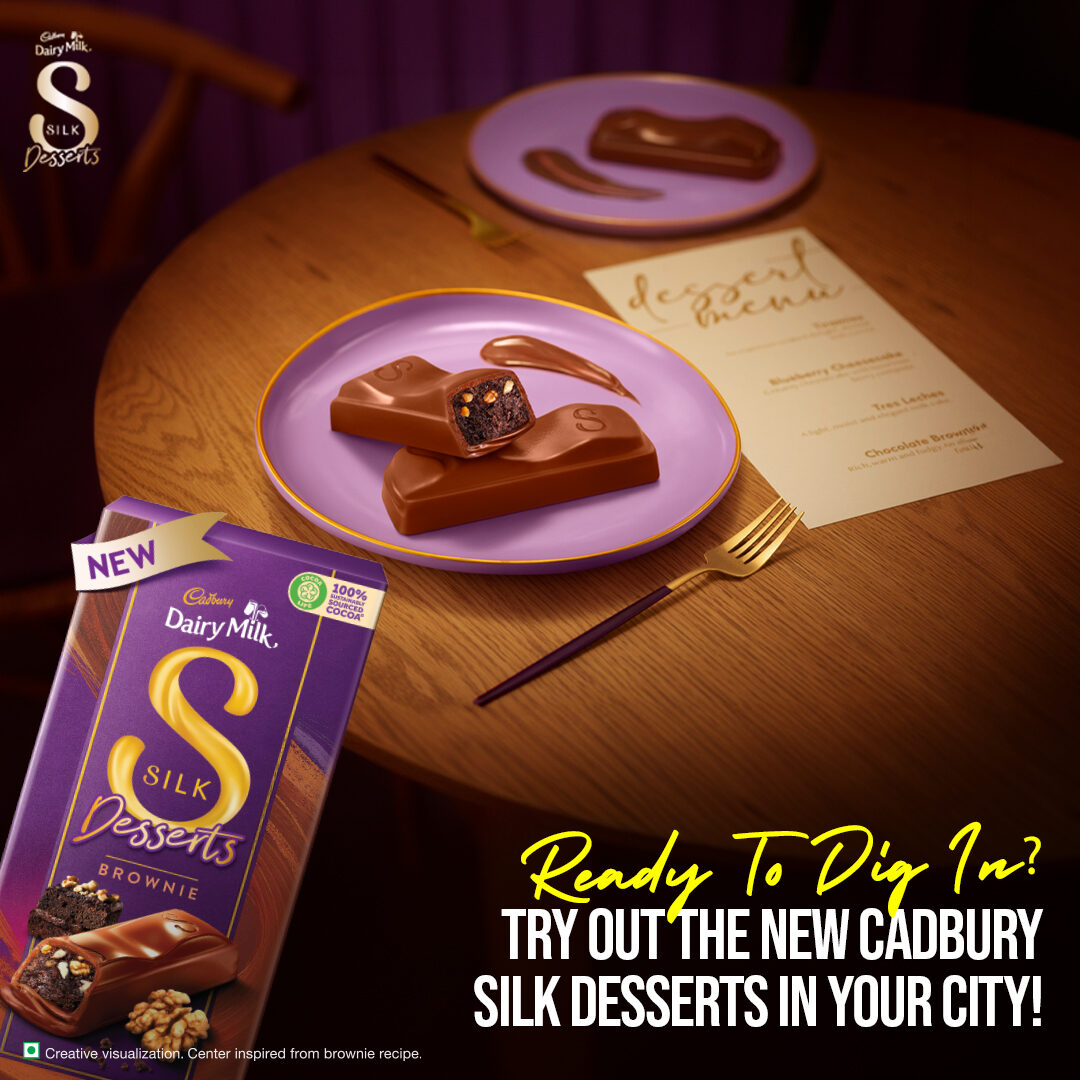
Cadbury. Silk Desserts bakery tie up.a01
Cadbury
Banner system
Coke. Flavours Unlocked lockup.a02
Coke
Campaign identity
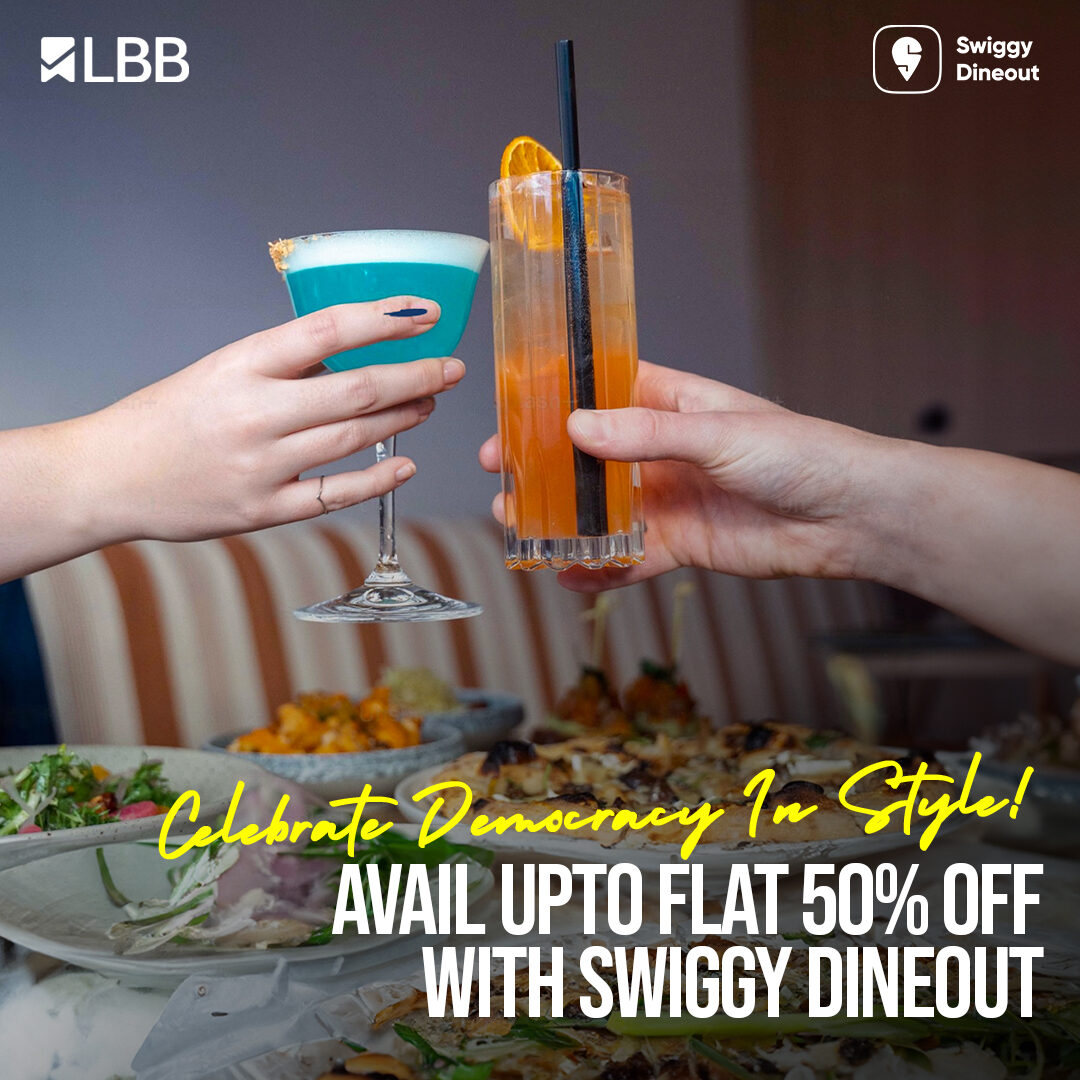
Swiggy Dineout. Offer post.a03
Swiggy
Offer post
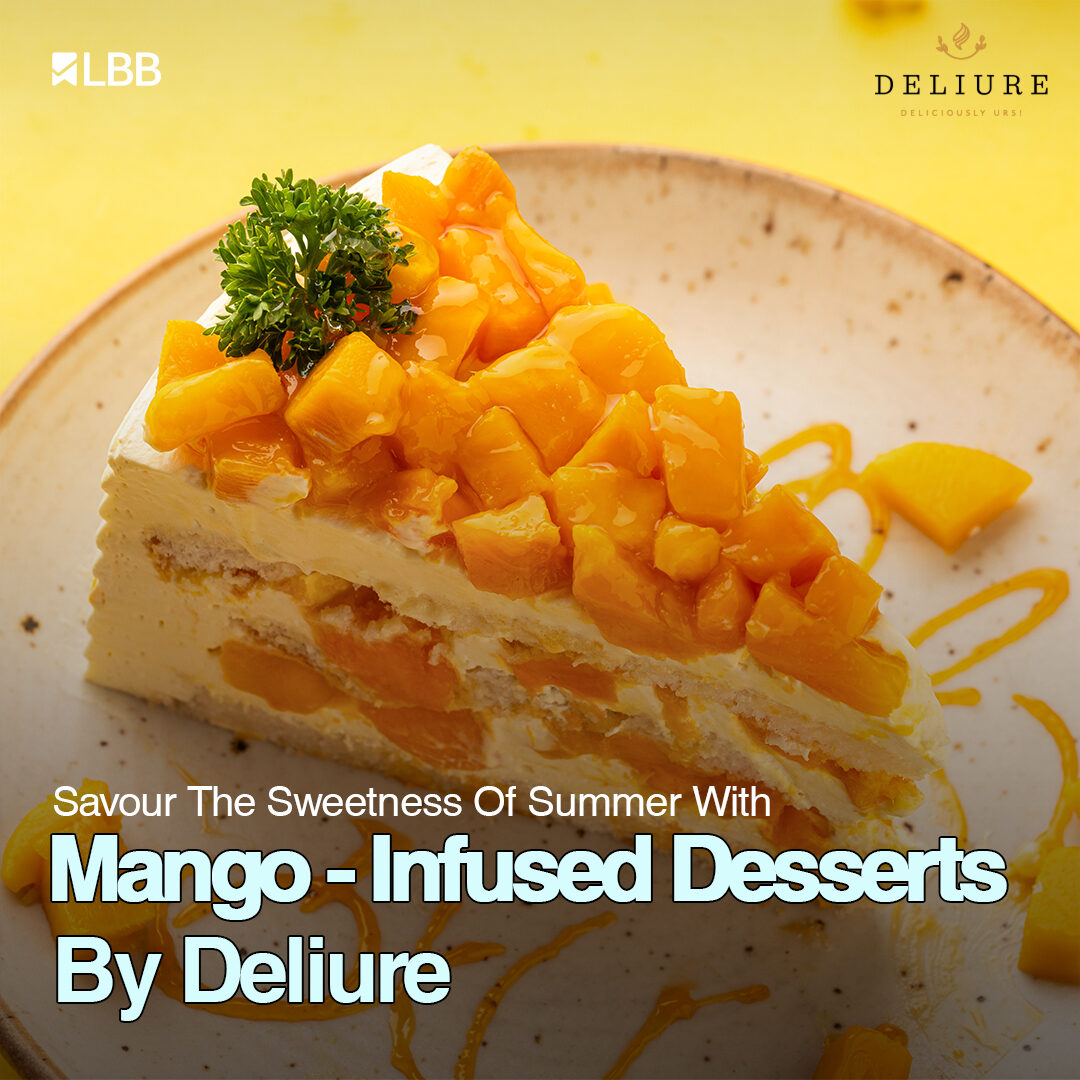
Deliure. Mango dessert summer special.a04
Deliure
FnB social
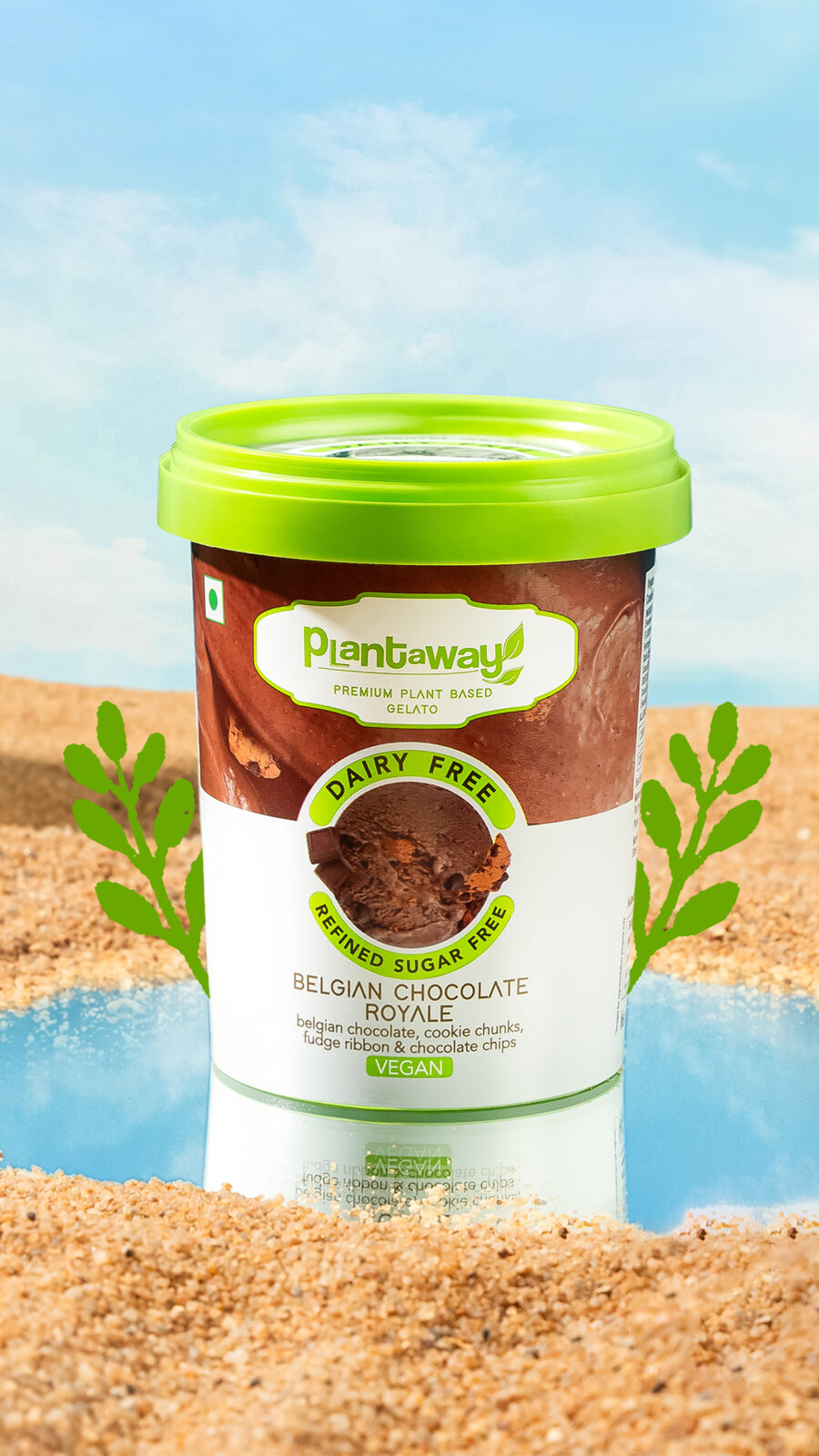
Plantaway. Dairy free ice cream story.a05
Plantaway
Story
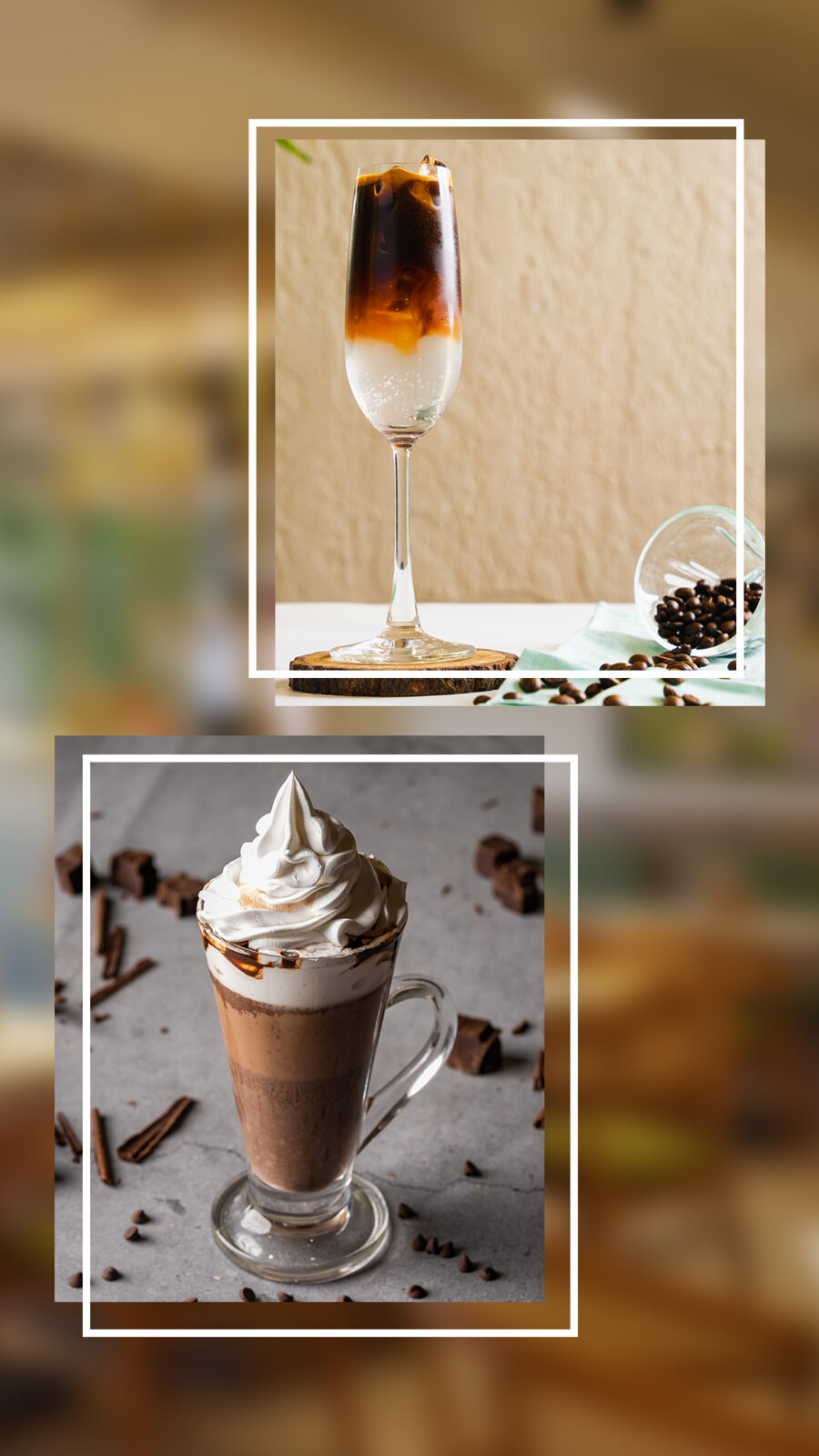
Roastea. Signature pour story.a06
Roastea
FnB story
Got Seoul. Campaign banner.a07
Got Seoul
App banner
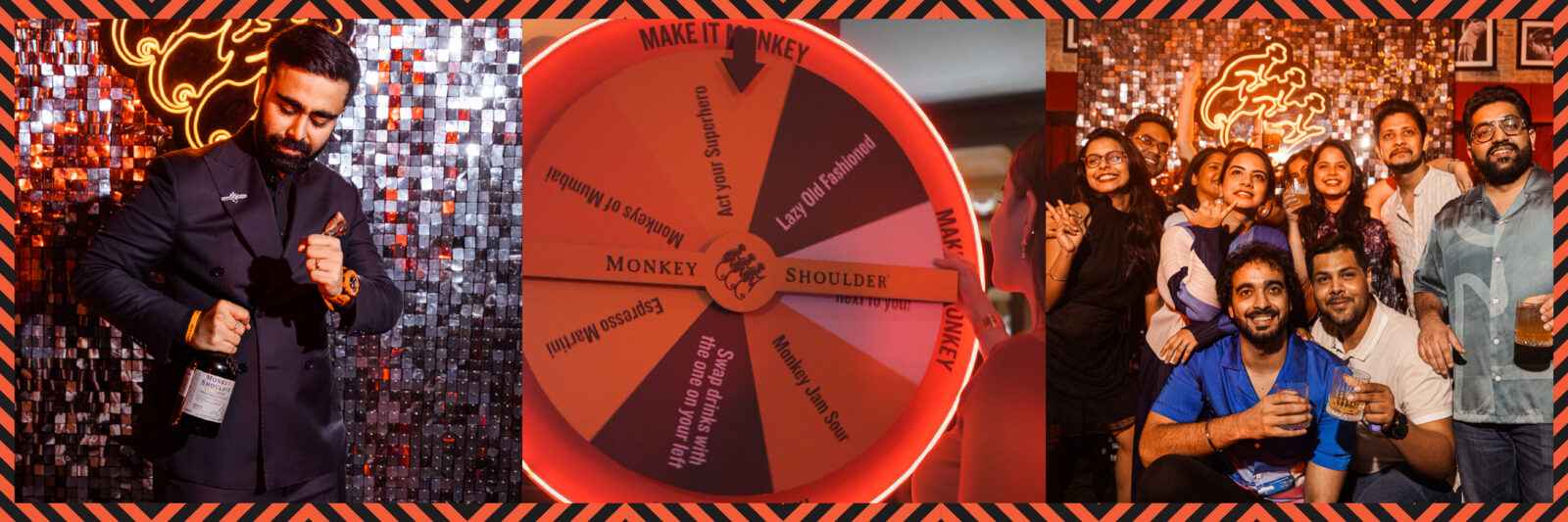
Monkey Shoulder. Three city event carousel.a08
Monkey Shoulder
Event carousel
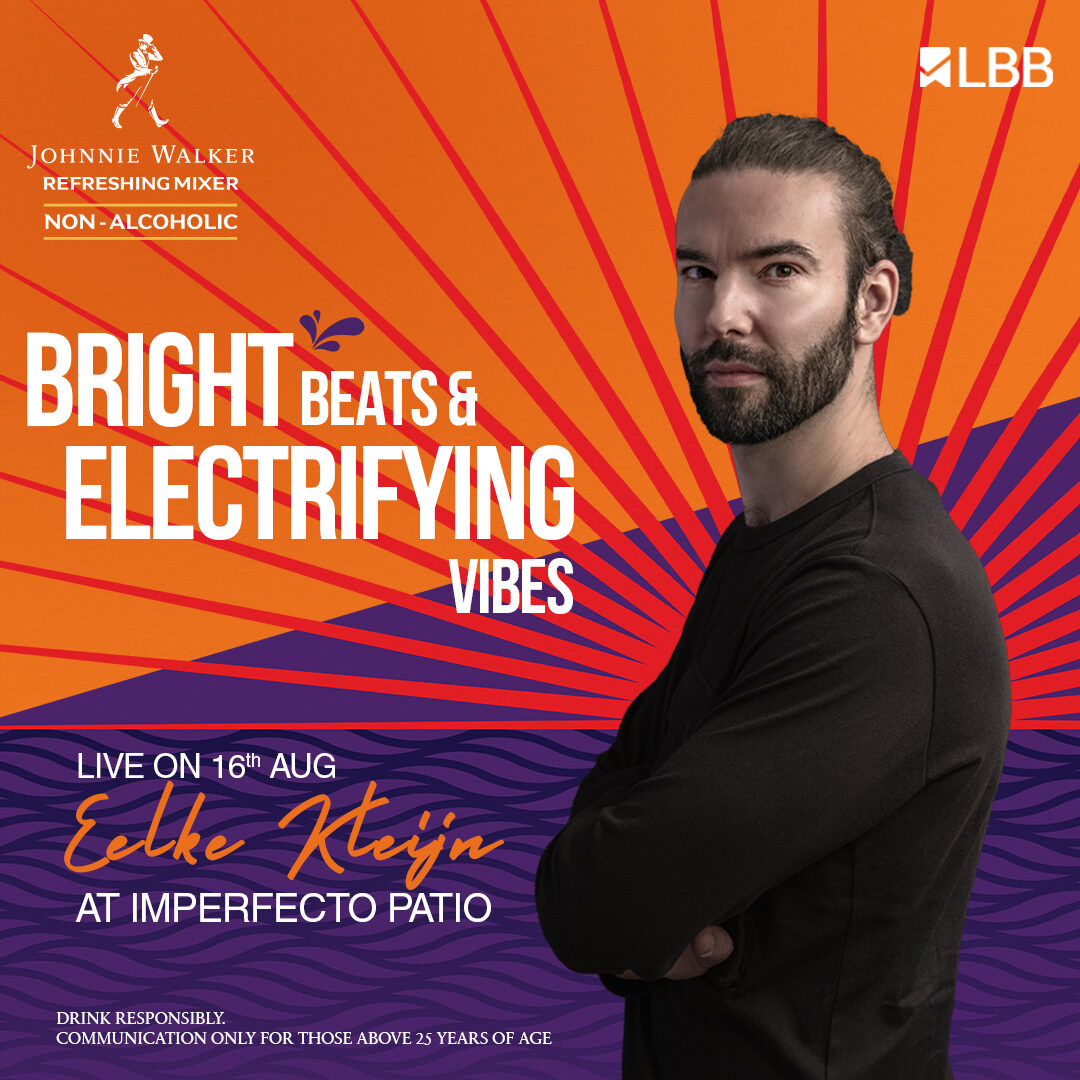
Johnnie Walker. Live night at Imperfecto Patio.a09
Johnnie Walker
Event social
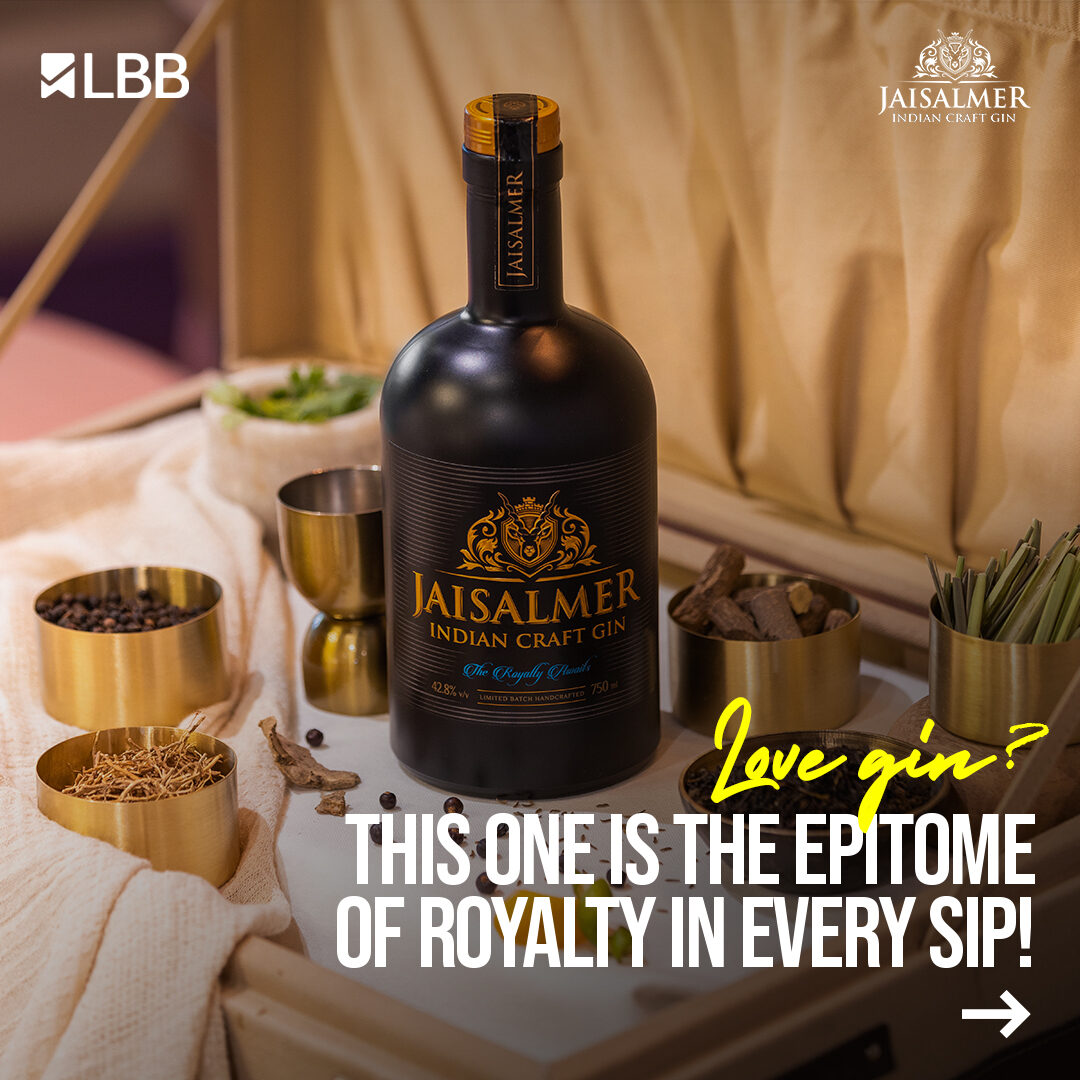
Jaisalmer. Indian craft gin social.a10
Jaisalmer
Spirits social
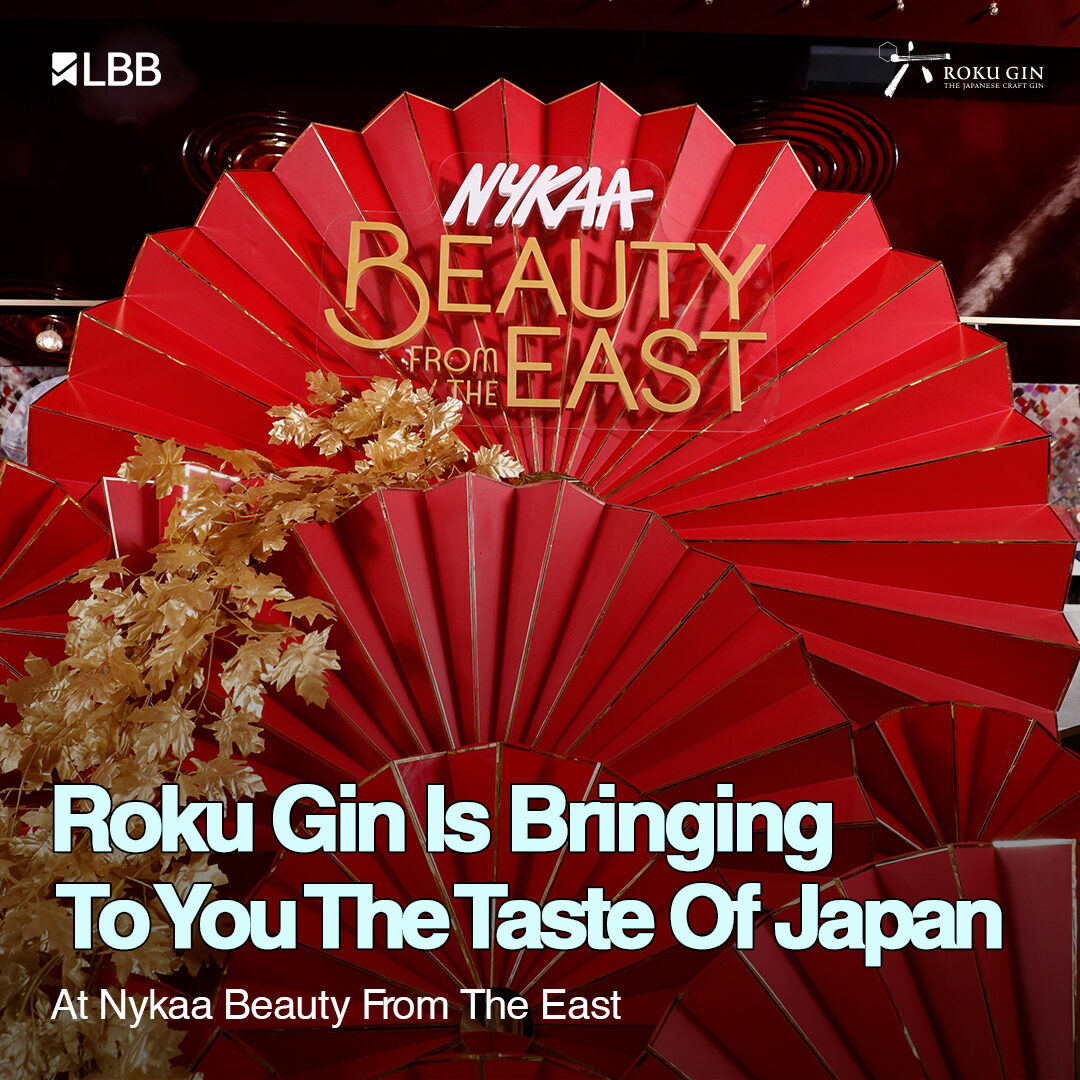
Roku Gin. Taste of Japan launch.a11
Roku Gin
Launch post
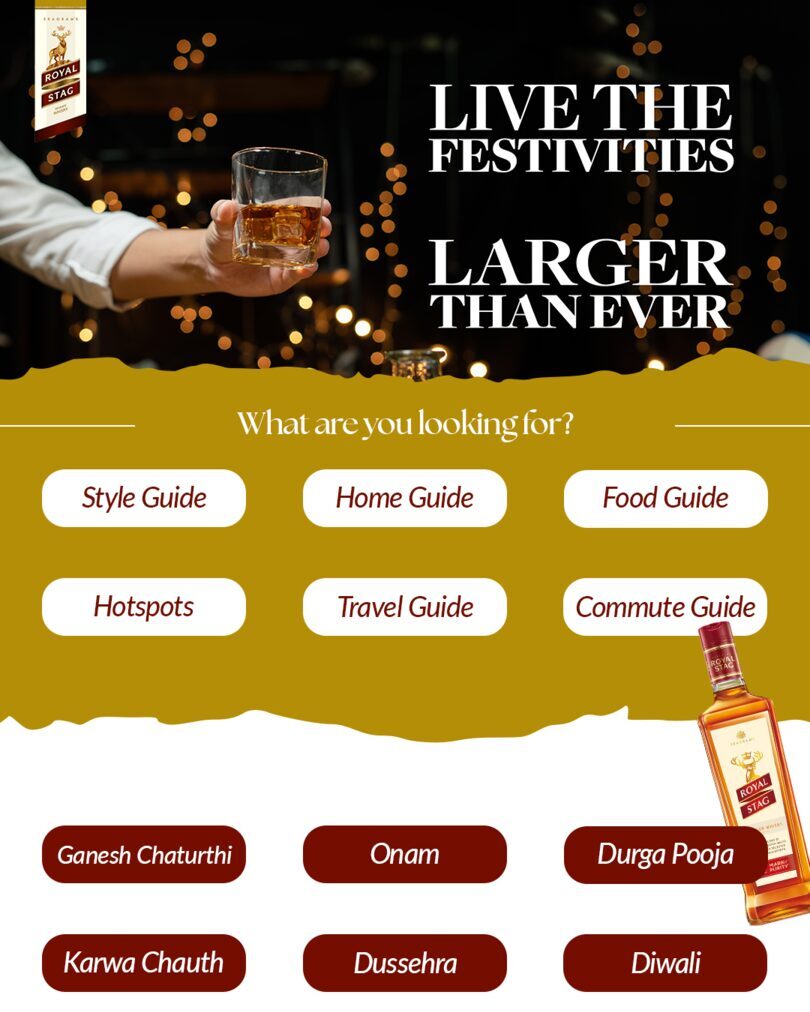
Royal Stag. Festive microsite.a12
Royal Stag
Microsite
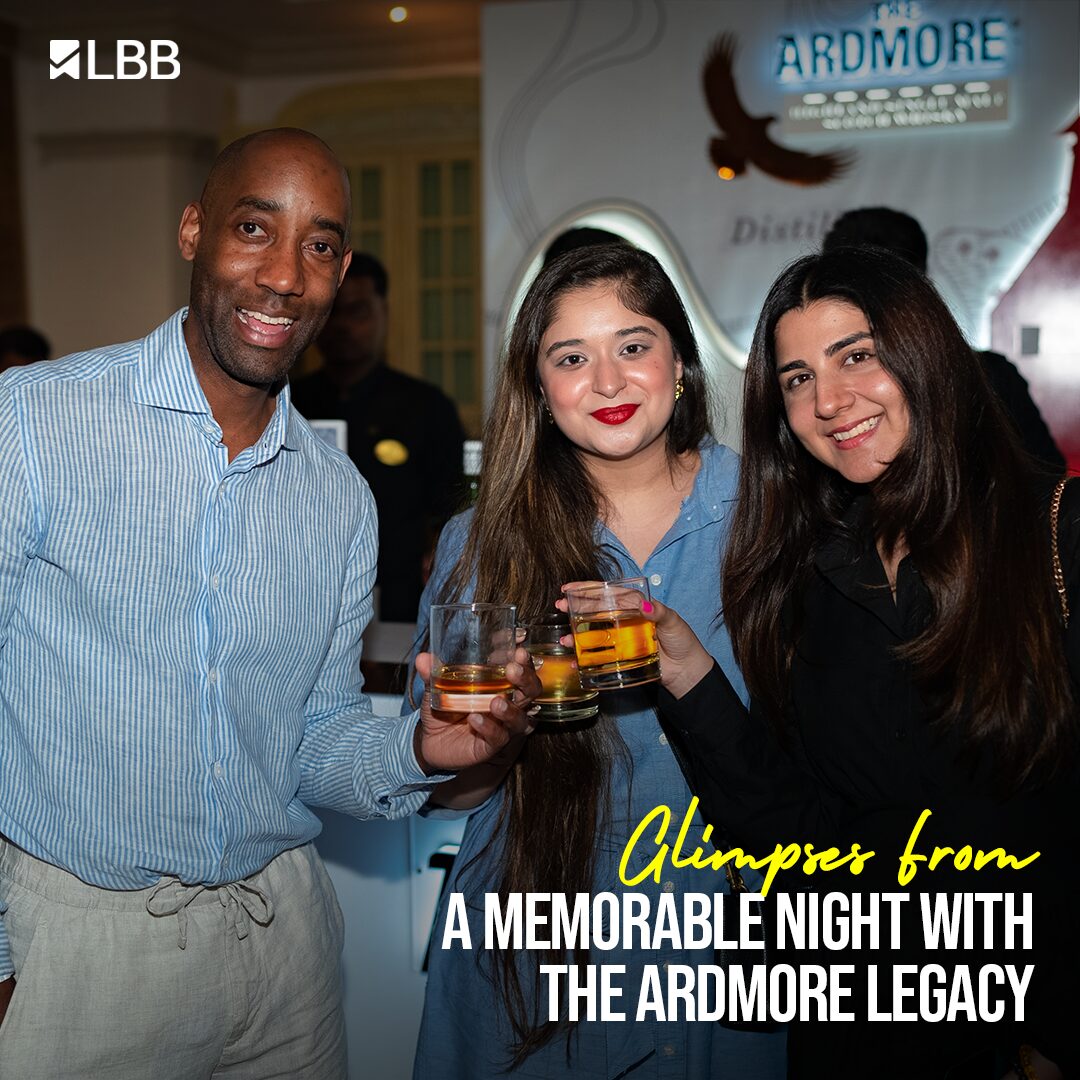
Ardmore. Legacy tasting night.a13
Ardmore
Event recap
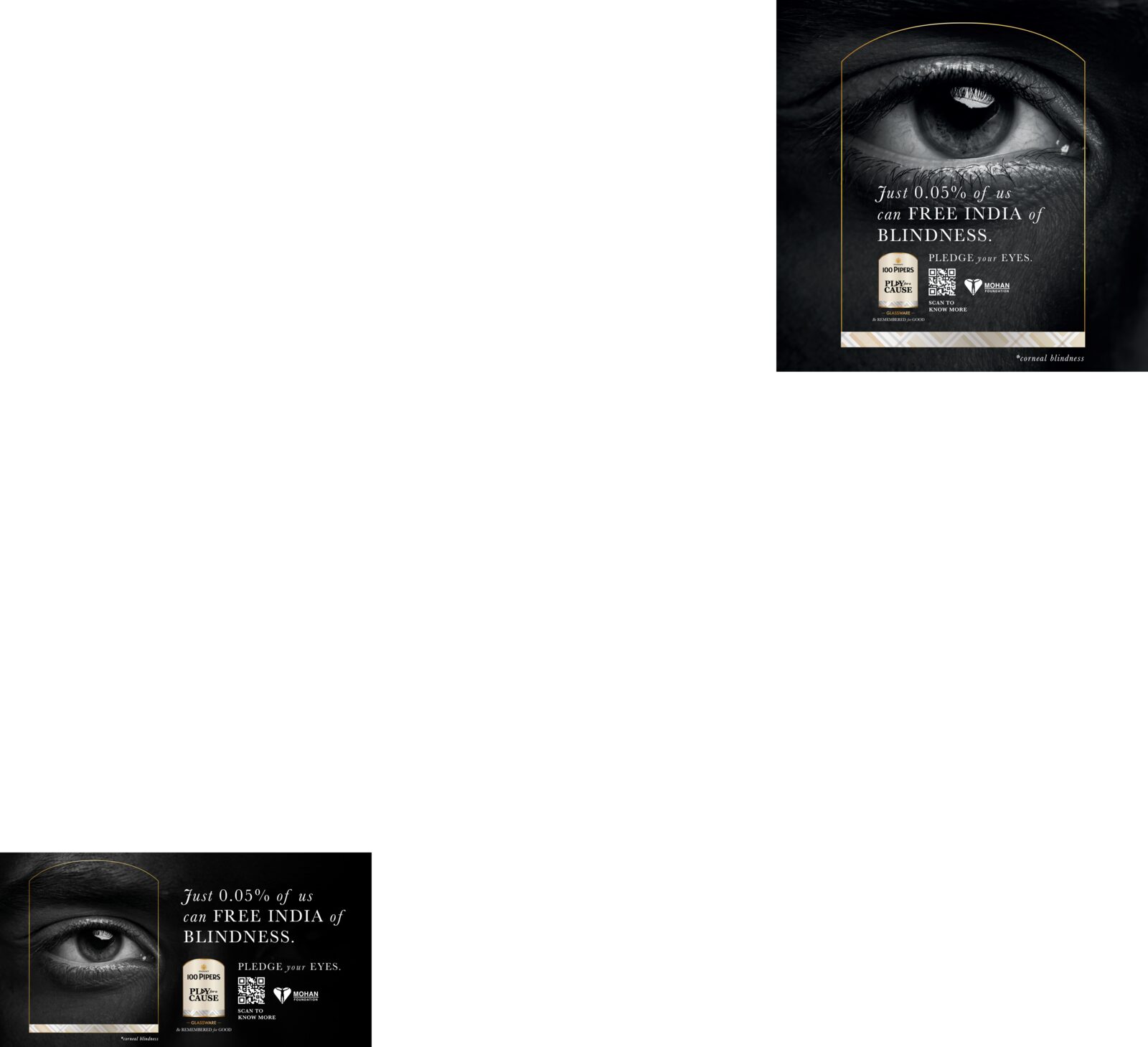
100 Pipers. Music night creative.a14
100 Pipers
One post
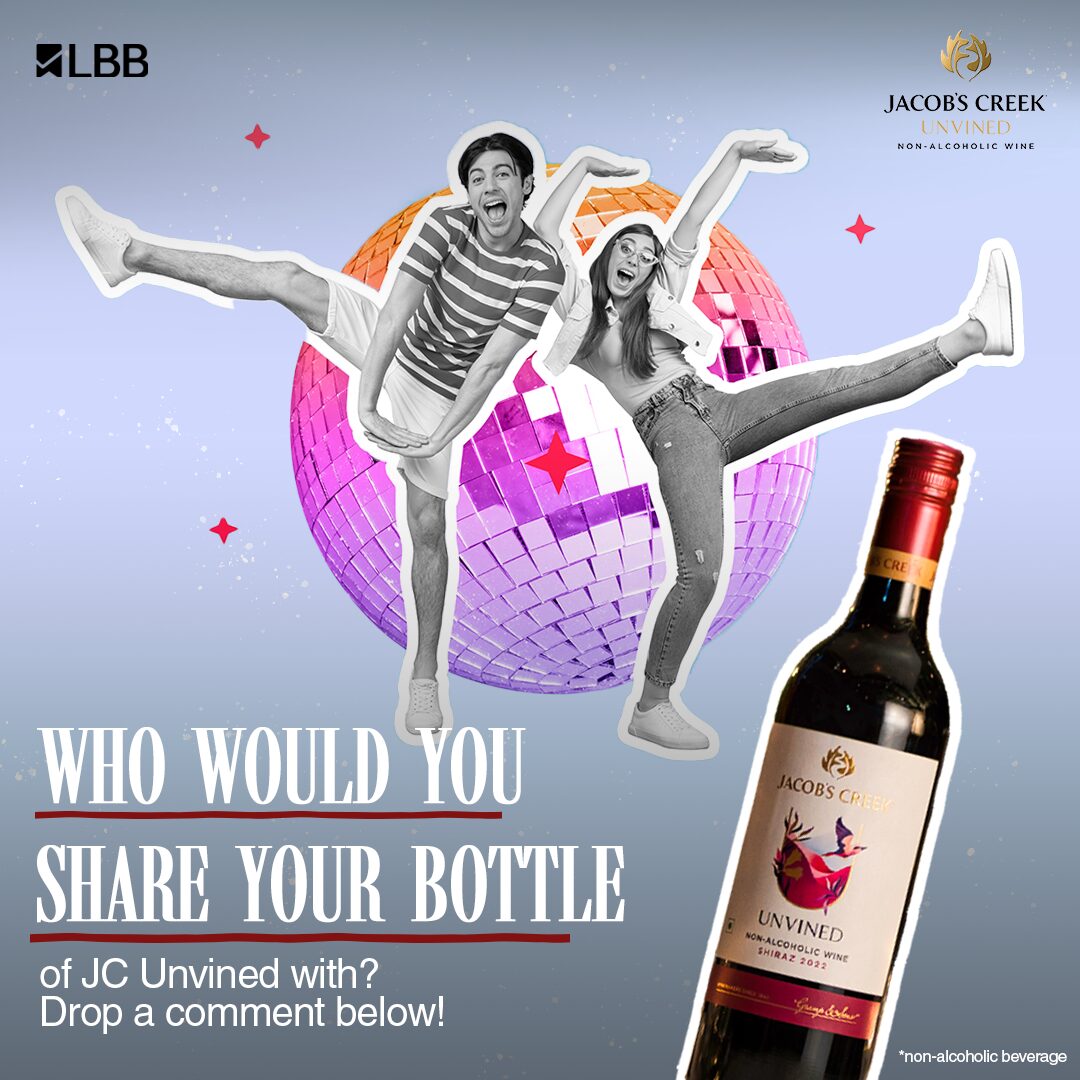
Jacob's Creek. Share your bottle.a15
Jacob's Creek
Wine social
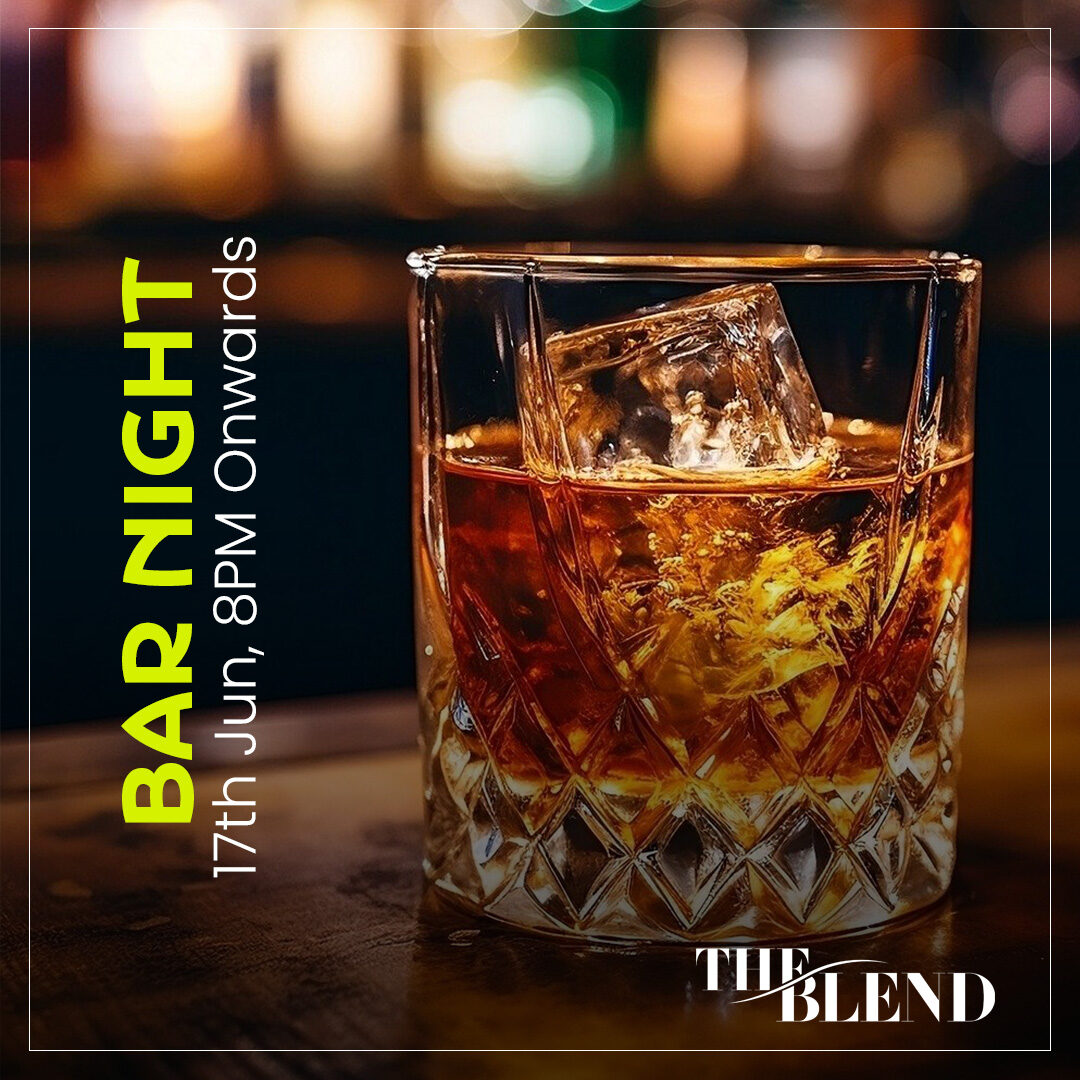
The Blend. Bar night static.a16
The Blend
Event post
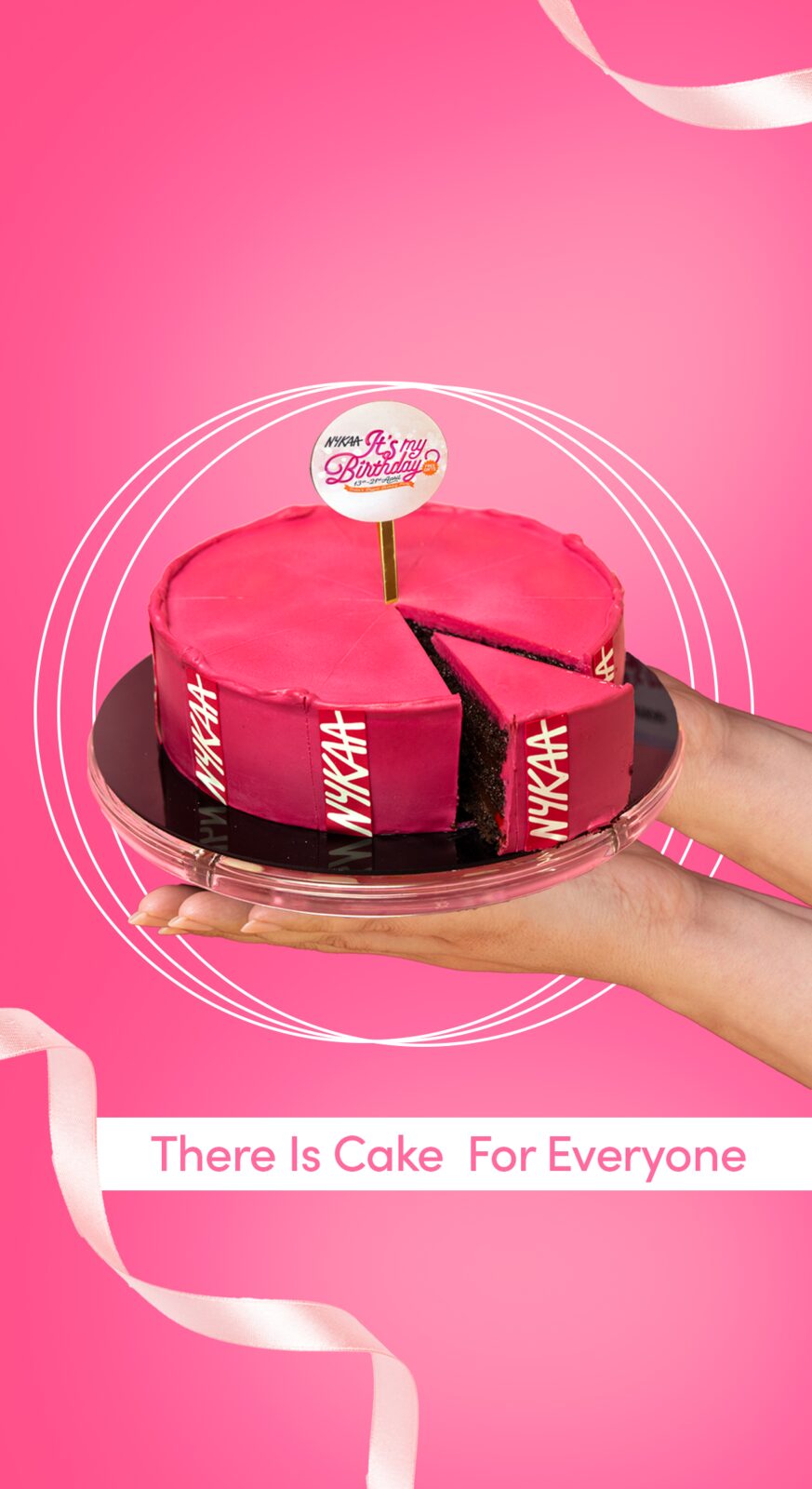
Nykaa. Birthday cake story.a17
Nykaa
Story
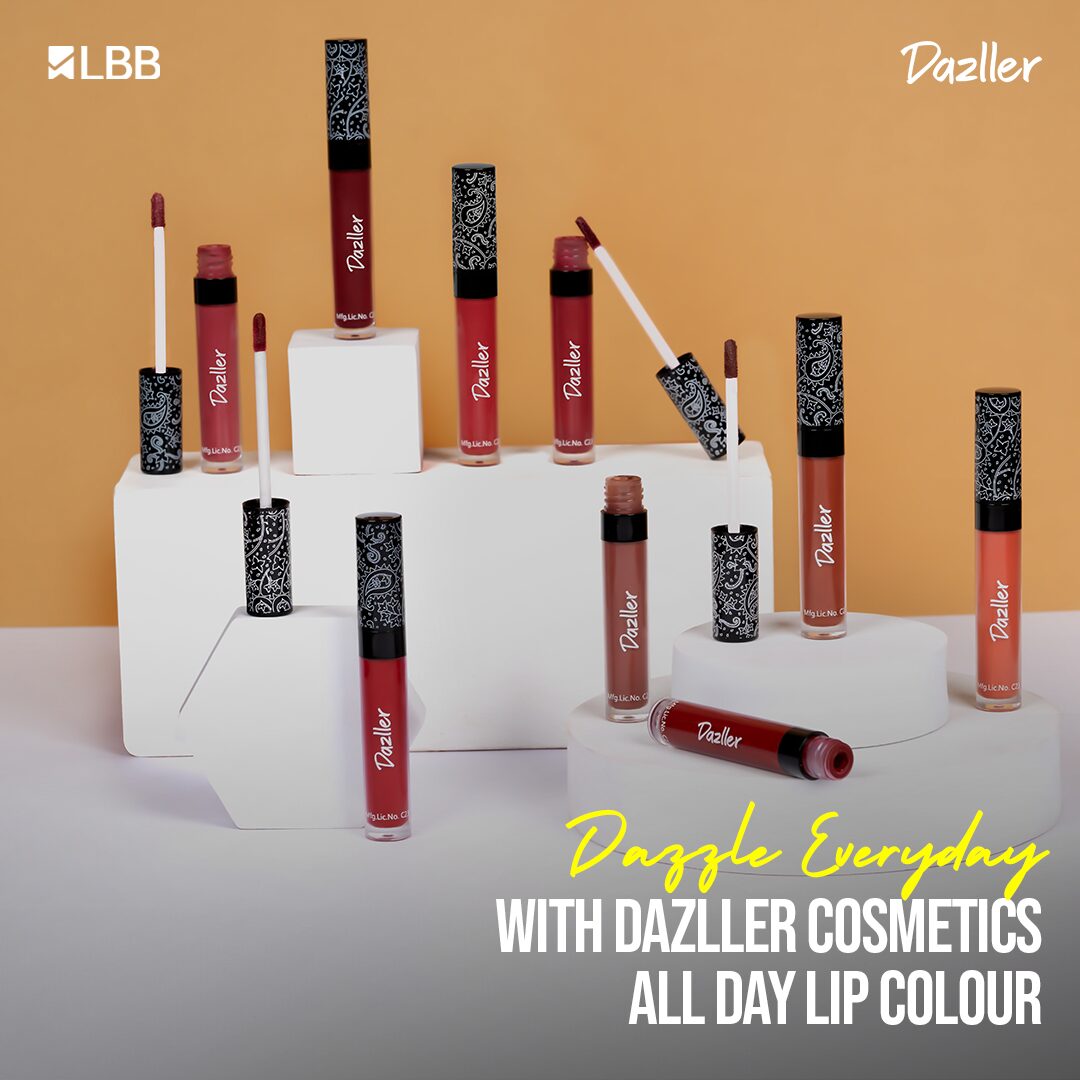
Dazller. All day lip colour range.a18
Dazller
Product post
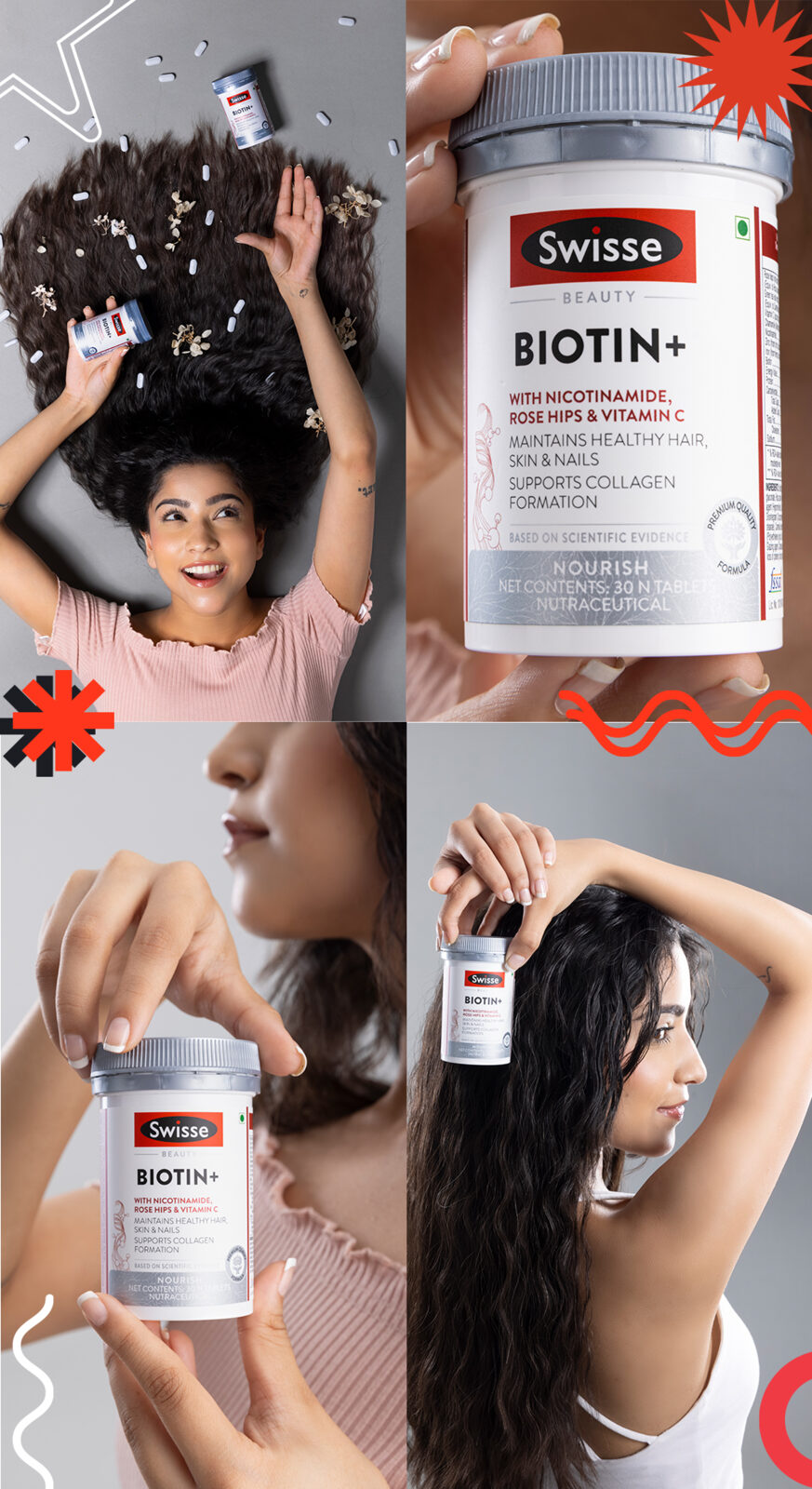
Swisee. Biotin campaign collage.a19
Swisee
Product story
Indus Valley. Damage free hair colour.a20
Indus Valley
Product post
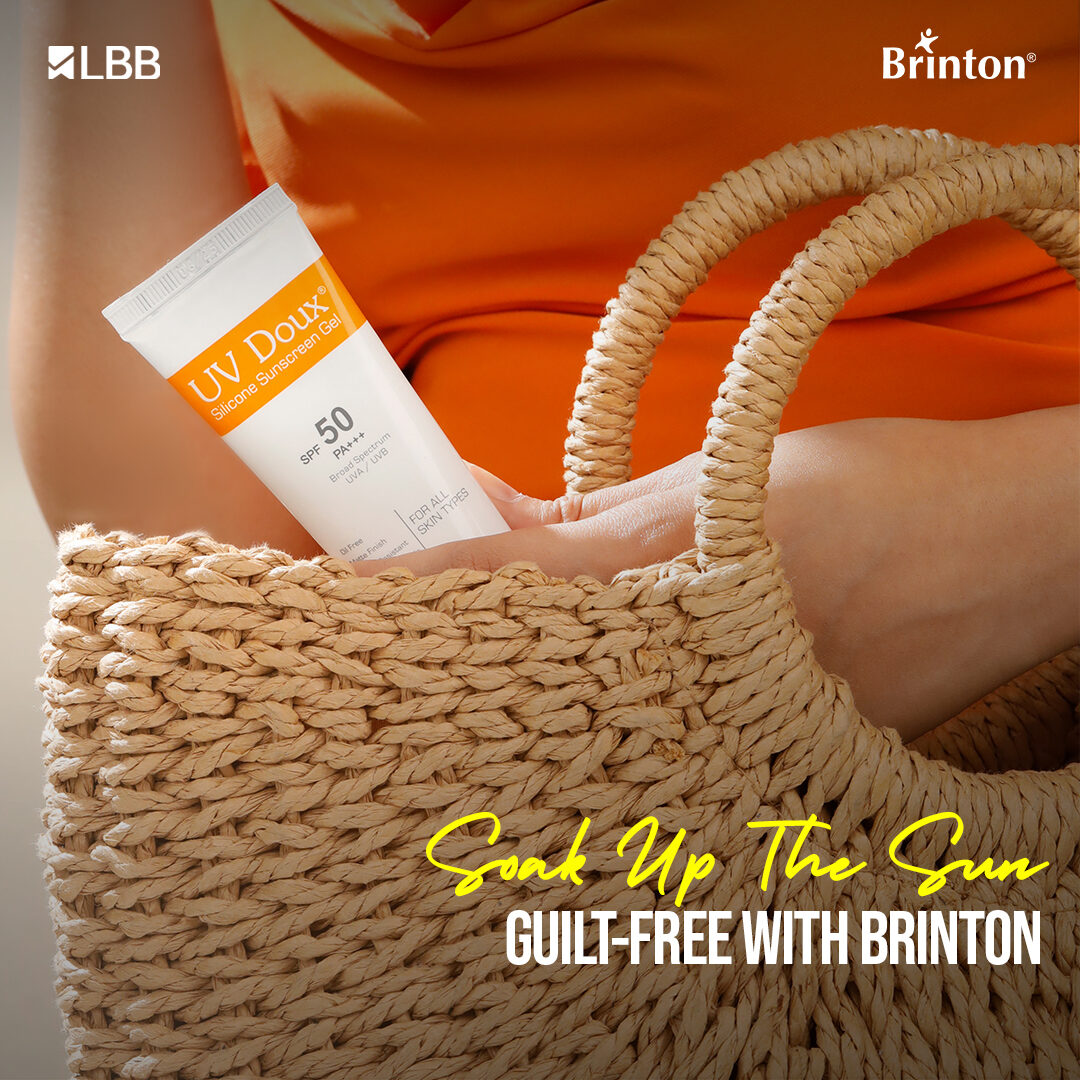
Brinton. Sunscreen summer static.a21
Brinton
Skincare social
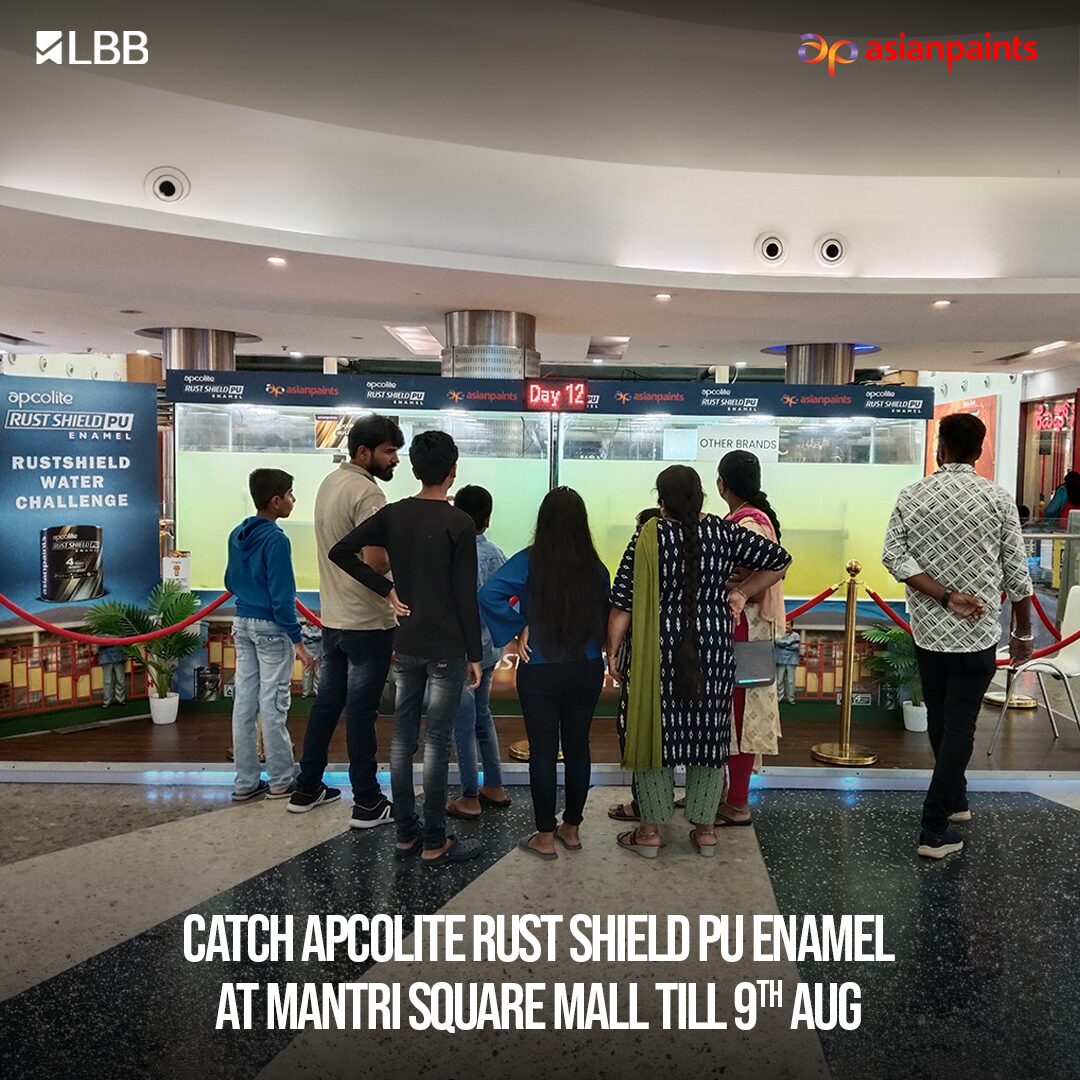
Asian Paints. Apcolite mall activation.a22
Asian Paints
Activation social
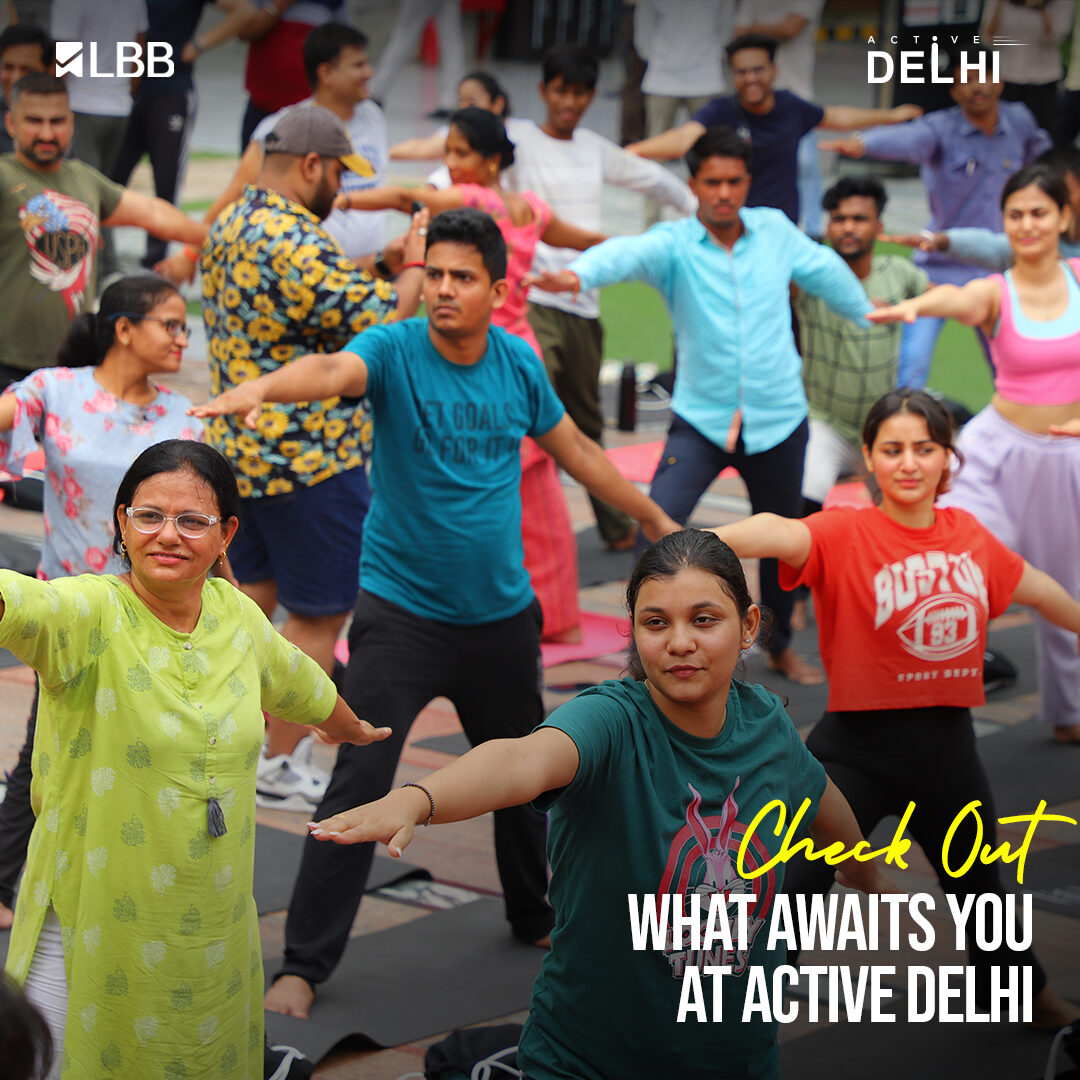
DLF. Active Delhi carousel cover.a23
DLF
Carousel cover
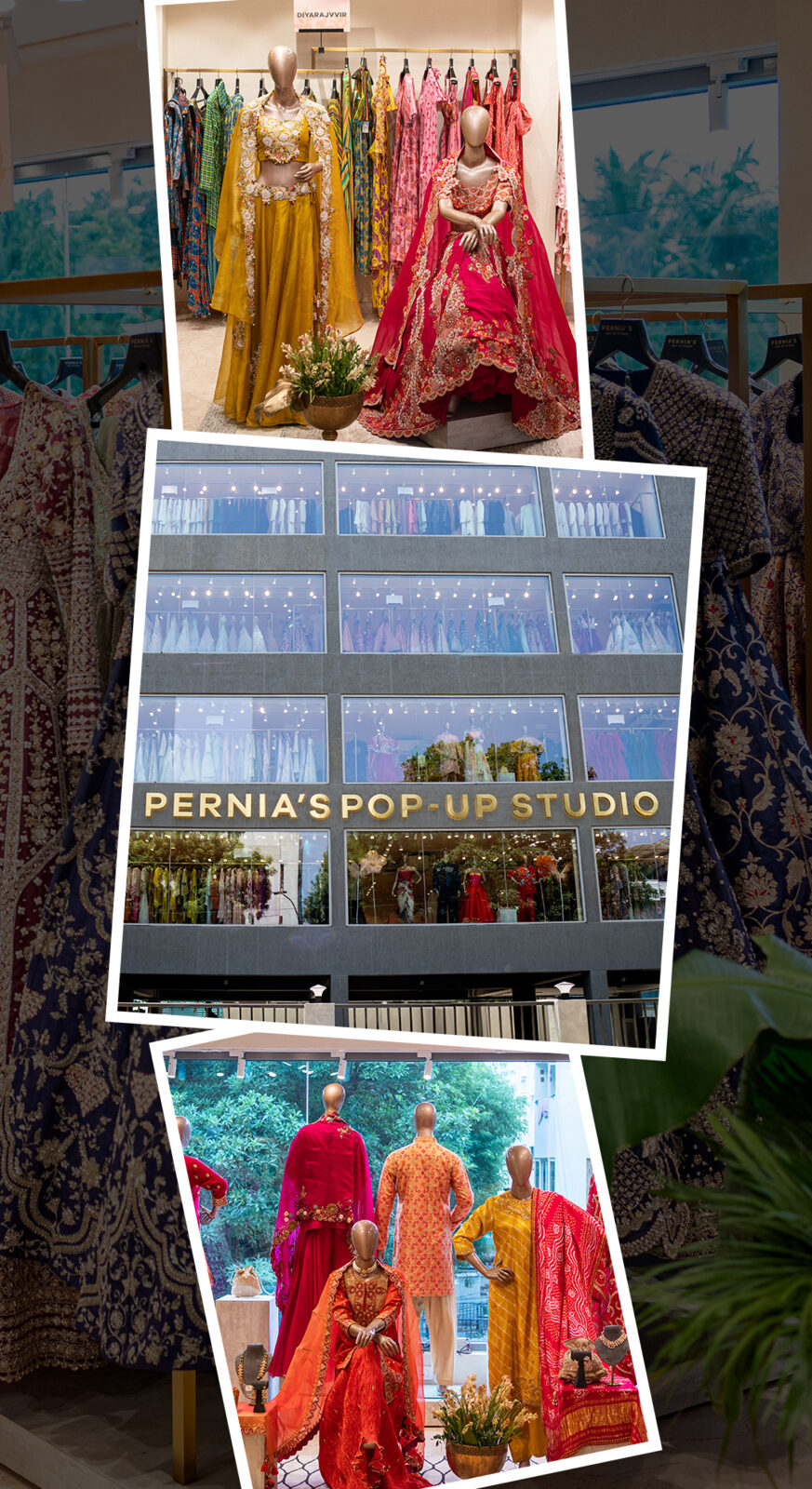
Pernia's Pop-Up. Studio story.a24
Pernia's Pop-Up
Story
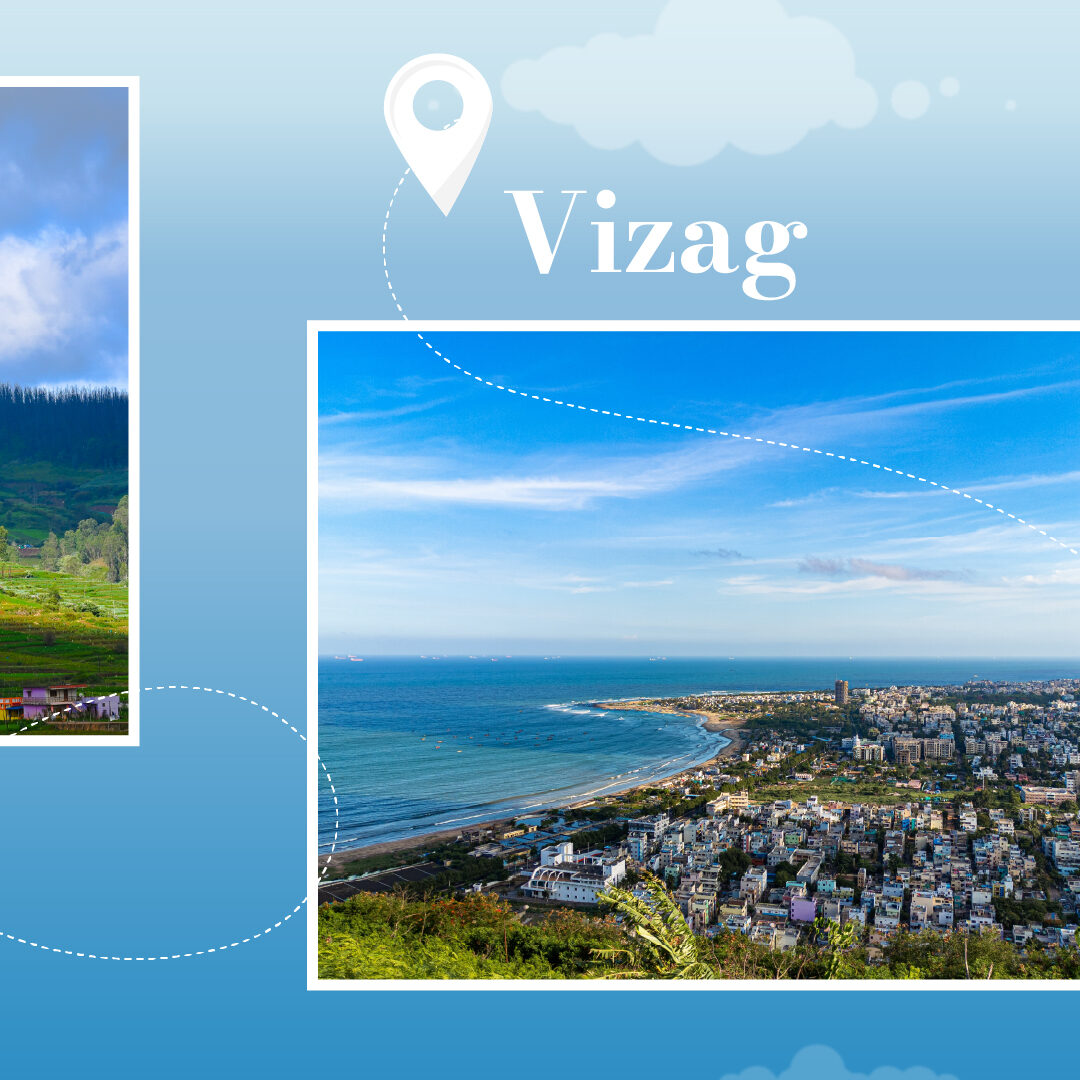
IndiGo. Destination banner panel.a25
IndiGo
Web banner
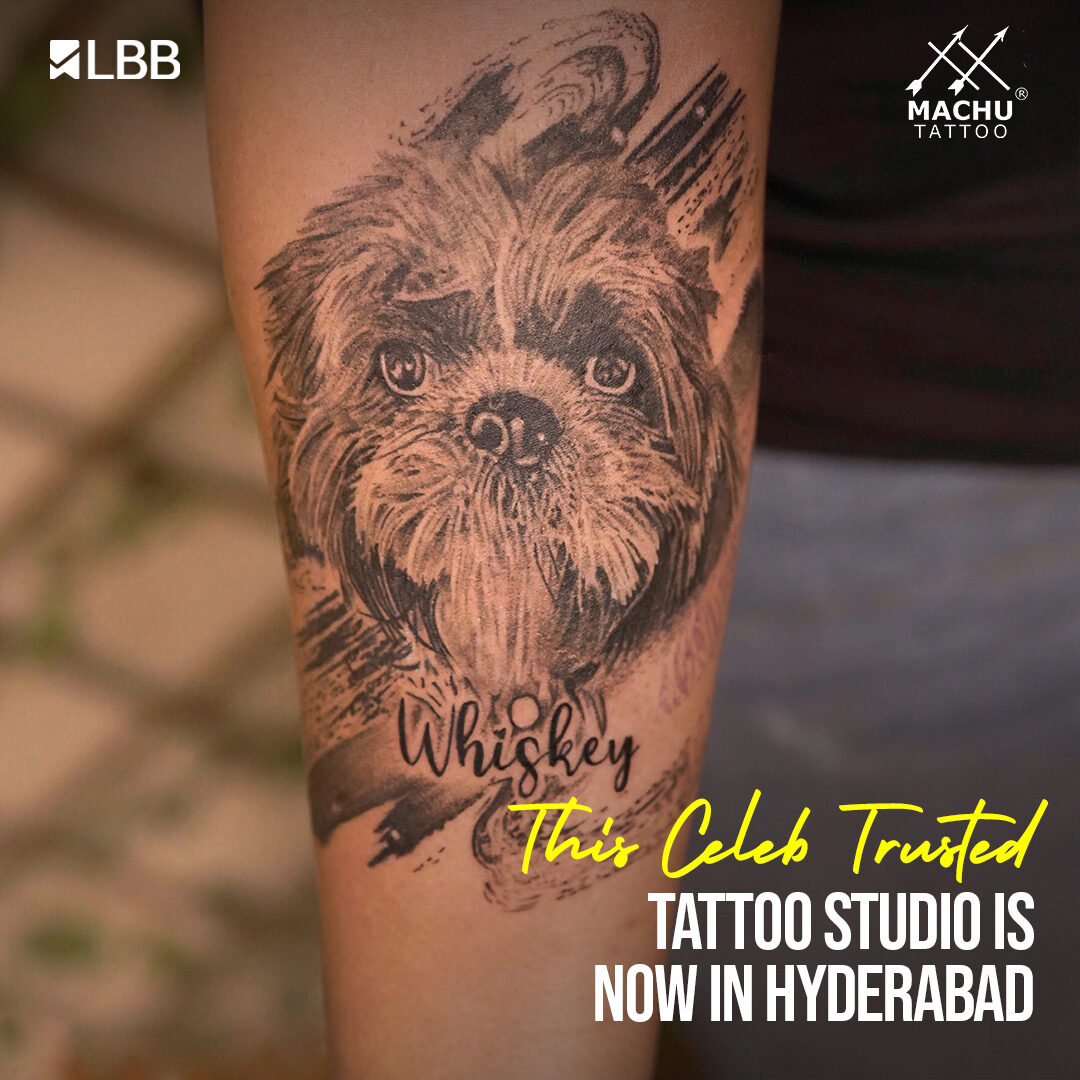
Machu Tattoo. Hyderabad opening.a26
Machu Tattoo
Launch social
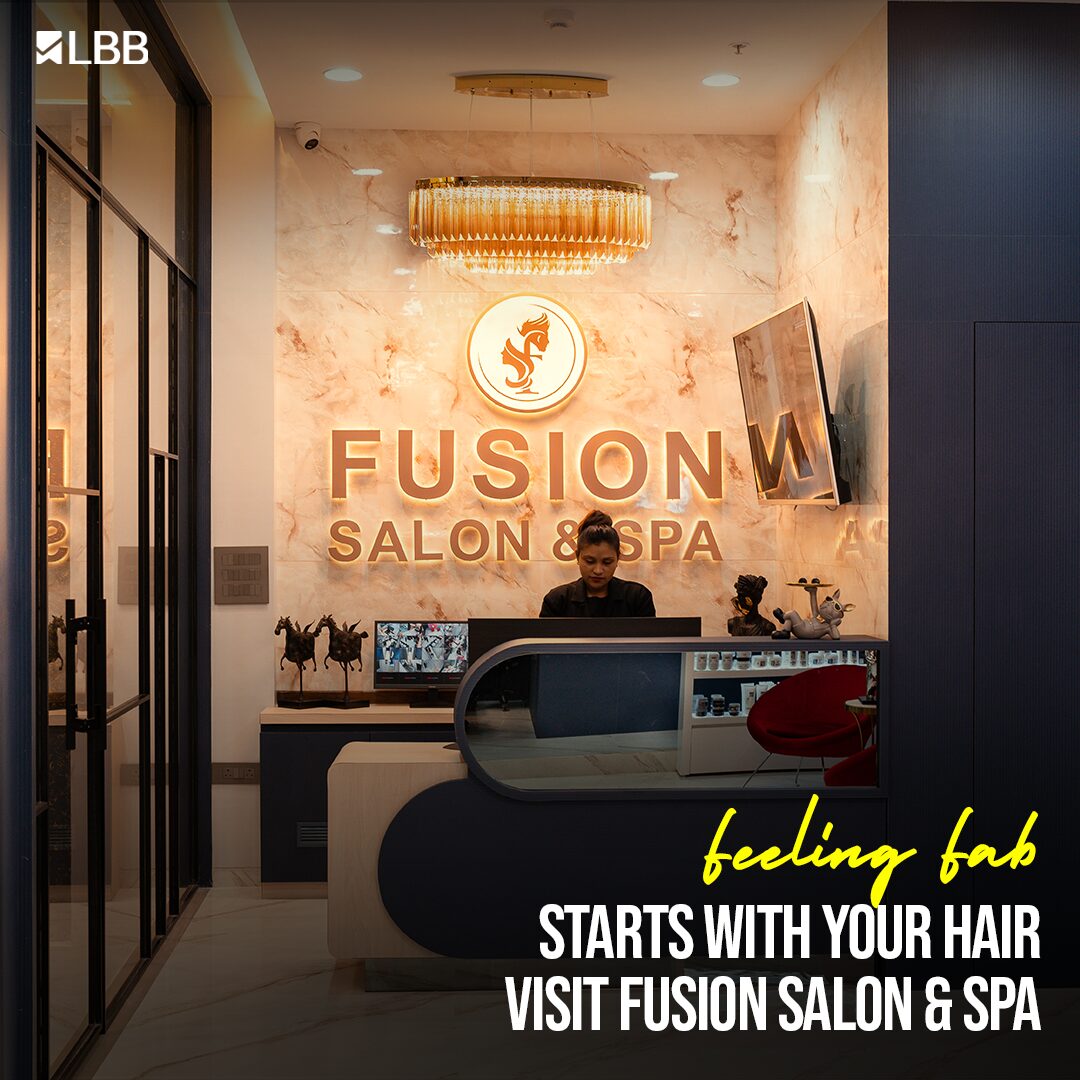
Fusion Salon and Spa. Interior reveal.a27
Fusion
One post
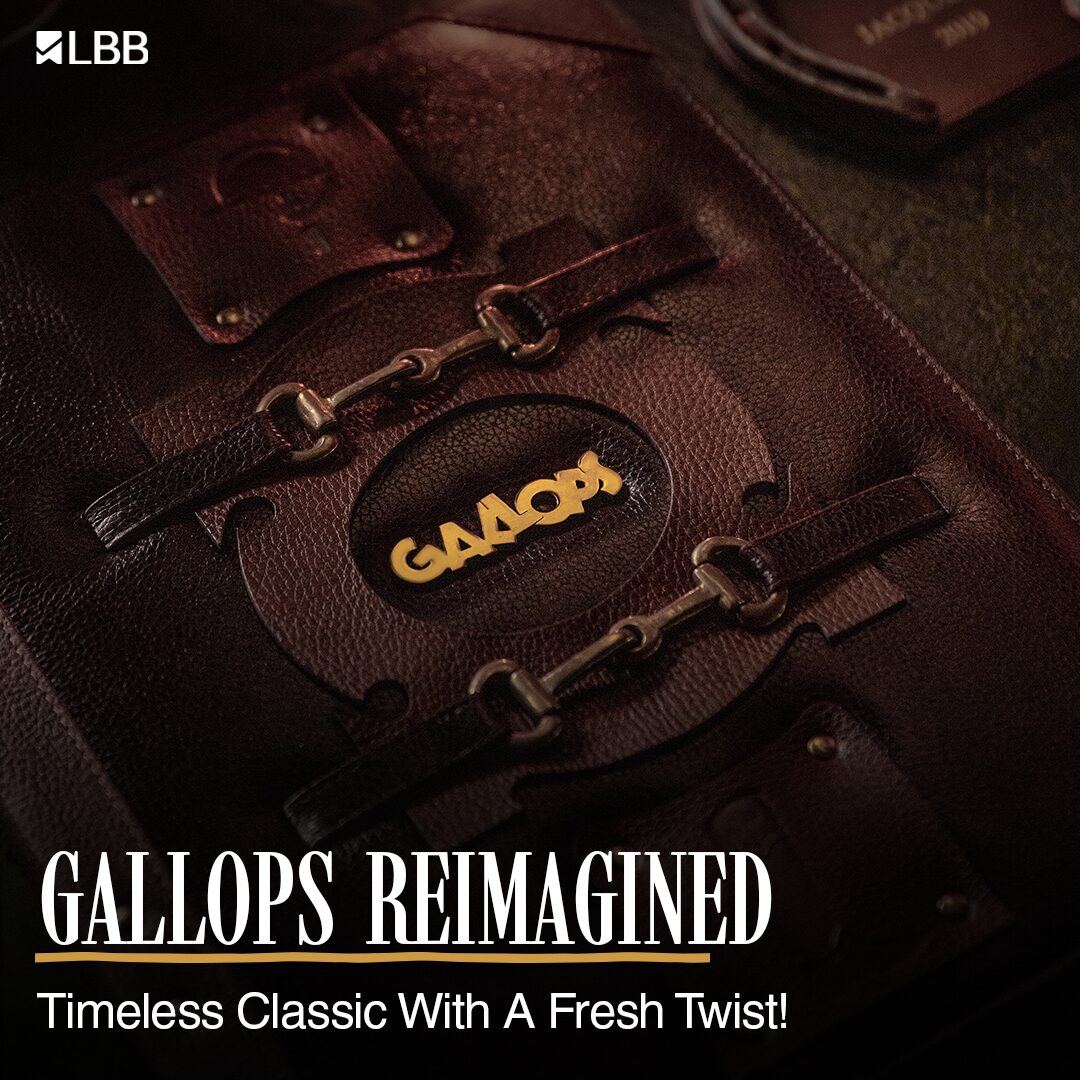
Gallops. Reimagined reveal, Mumbai.a28
Gallops
Restaurant social
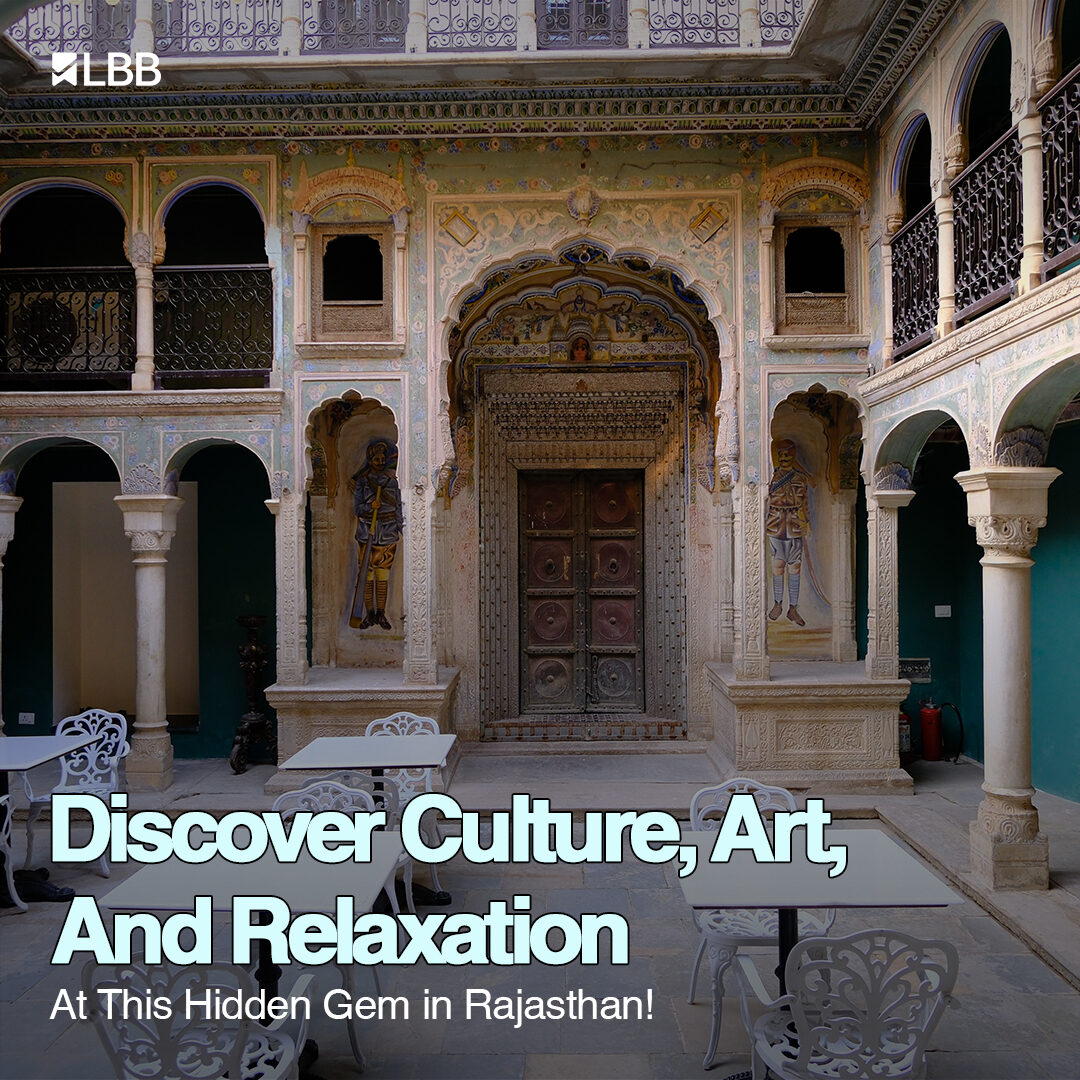
Vivaana. Hidden gem in Rajasthan.a29
Vivaana
Hospitality social
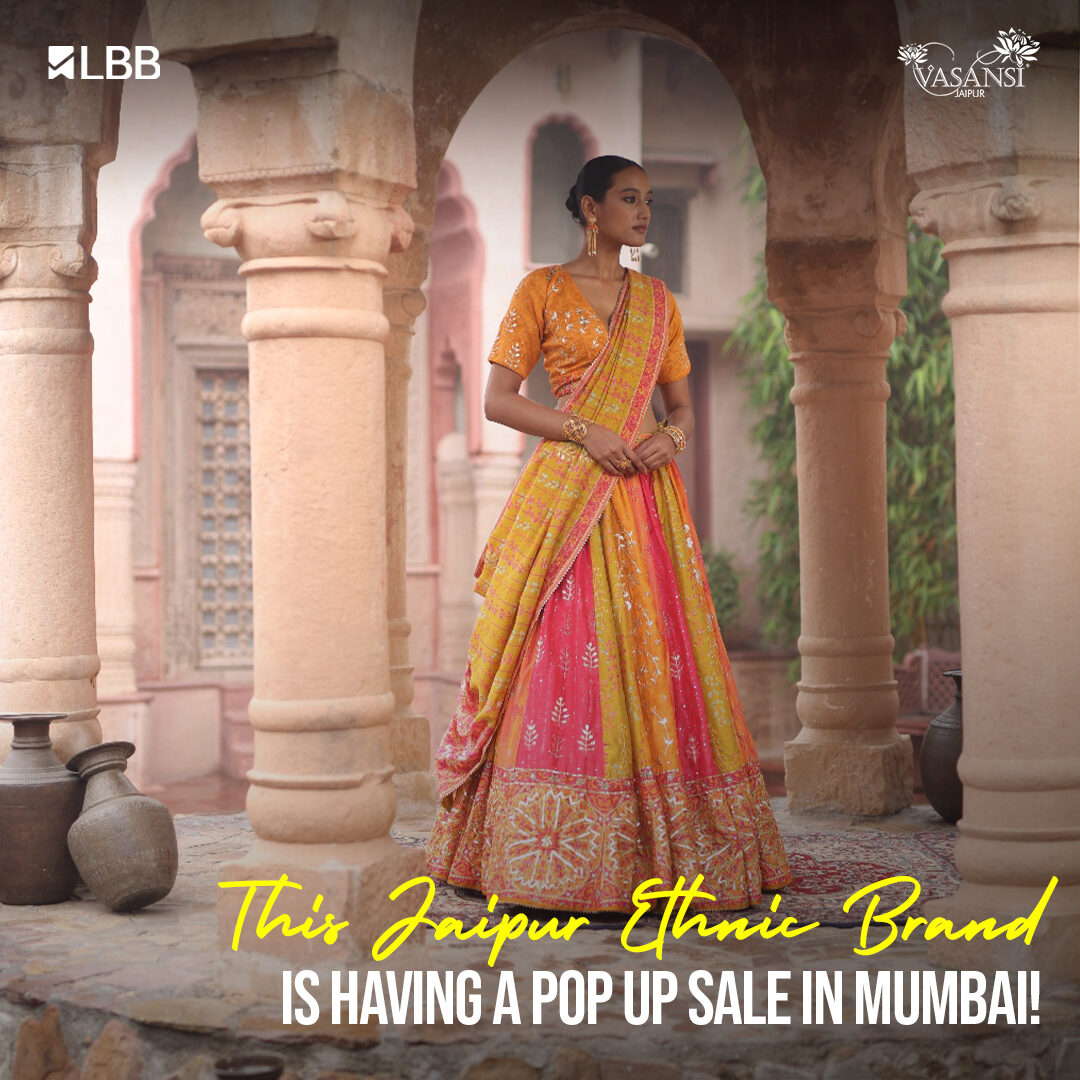
Vasansi Jaipur. Pop up sale, Mumbai.a30
Vasansi
Fashion social
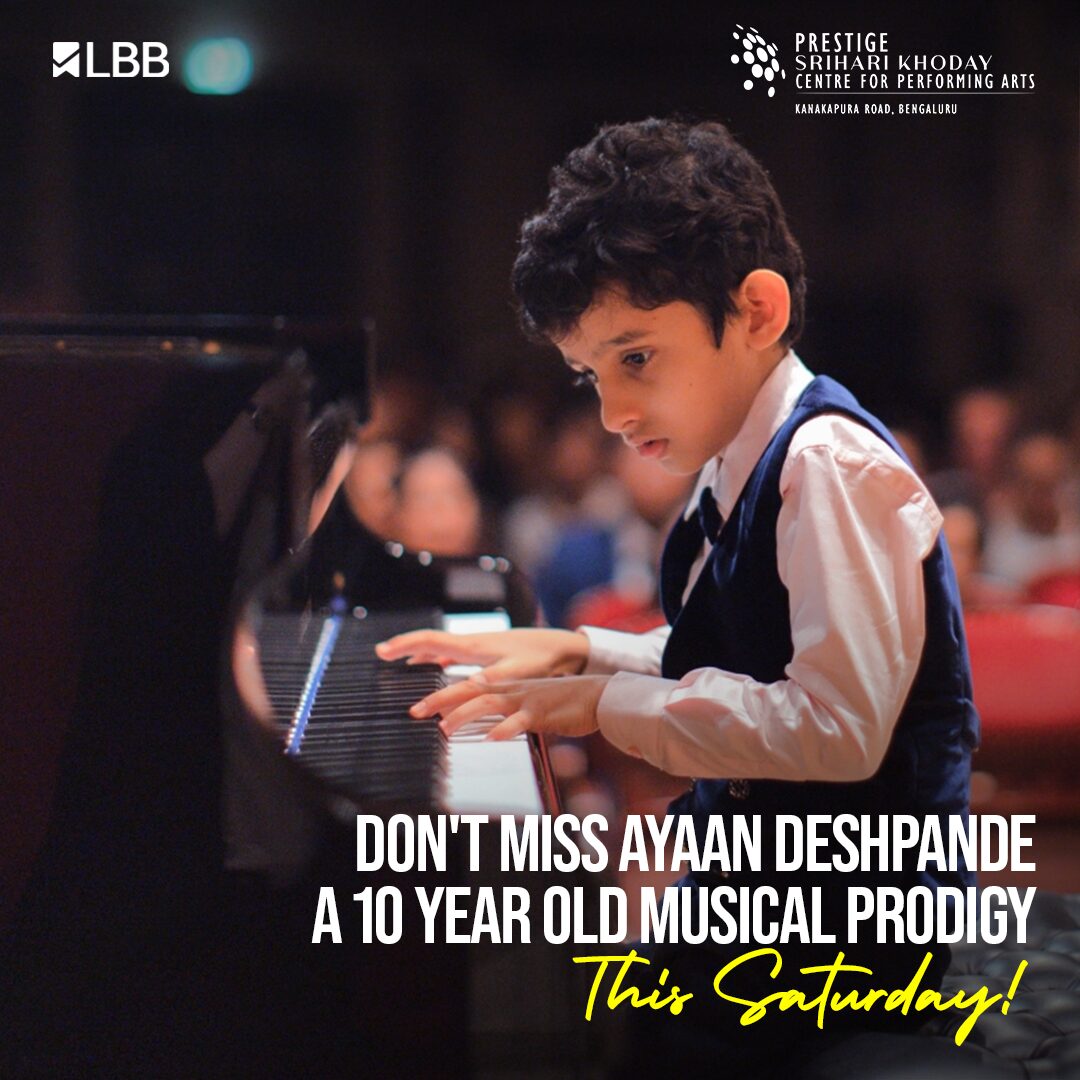
Prestige SOI. Concert night post.a31
Prestige SOI
Event social
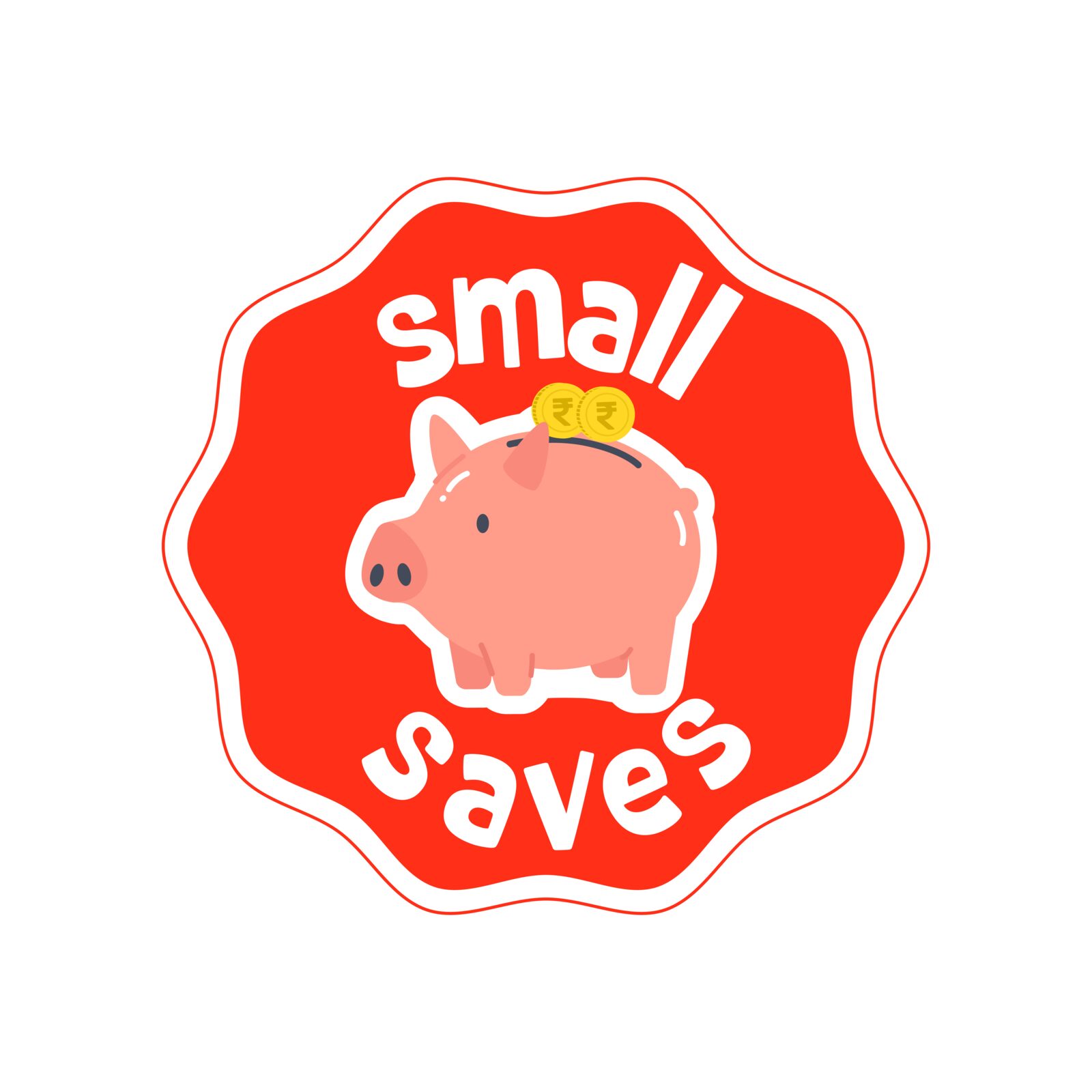
Life Saves. Small saves sticker.a32
Life Saves
Sticker system
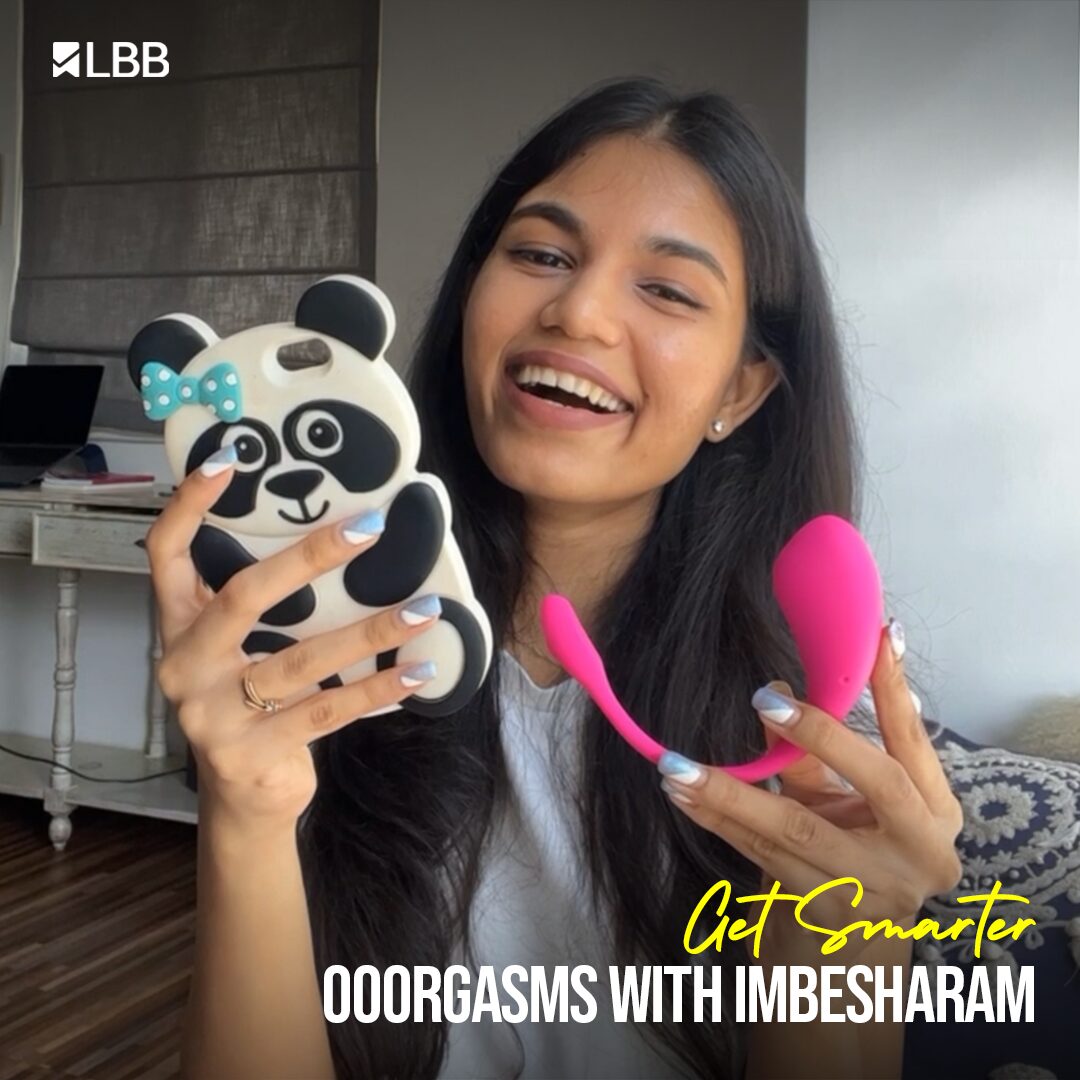
IM Besharam. Bold wellness social.a33
IM Besharam
One post
Campaign work designed by Ritu Sharma as the responsible designer on each brief, via Little Black Book, a Nykaa company. All brand names and marks remain the property of their respective owners, shown as a record of authorship.
Closing note
The premium work taught me how to be quiet on behalf of a brand that already had a voice. The next case is the opposite problem: six brands without one yet, all needing their own.
Continue to § 05, Silver Crown Group② ↓
— ★ Featured case 02 · The cluster · Six brands, one studio —
In which six sisters must never match, and their names stay quiet.
A Dubai based holding company with six subsidiaries across unrelated industries. Each needs its own face. None can contradict the others. I'm the entire creative department. Four of the six names are withheld outright, one hides inside the group’s own name, and one is disclosed below in full. The discretion is part of the work.
★ Featured
The groupSilver Crown Group. Dubai based holding company operating six subsidiaries across unrelated industries.
My scopeThe whole creative side: naming, identity, type, social, print, and the shared rules underneath all six.
The workThe parent backbone, six separate looks, about 50 pieces a month, and the rules that keep the family apart. November 2024 to today.
Six industries. One studio.
№ 02 / Silver Crownfolio 30 →
The challenge
The brief, restated honestly: don't let it look like one person made all of these.
A construction firm bidding on government work cannot share visual DNA with a tuned car shop. Each needed real, defensible difference, built fast, with one pair of hands.
Six brands and one of me. Some nights the only thing holding it all together was the naming convention.
05.1 · Architecture
The shape of the group.
● Master backbone
● Subsidiary surface
Diagram 05.1③
The principle
The group is set up as a family rather than a chain. The parent brand carries the connective grammar: type discipline, document architecture, the way numbers are set, the way the company is named at the bottom of a page. The subsidiaries are free to differ on everything else. Color, mood, photographic direction, even the paper they print on.
05.2 · The six
What each brand does.
The mark, frosted. Name withheld under NDA.01
№ 01 / Construction
The construction anchor
Government approved contractor working across UAE infrastructure. The mother brand. Restrained, technical, sets the architectural backbone the family inherits from.
Steel · ink · blueprintanchor
The mark, frosted. Name withheld under NDA.02
№ 02 / Engineering
The engineering consultancy
MEP consulting and structural review for commercial projects. Drawings, dimensions, data dense. The brand looks like a clean technical document, on purpose.
Gold · graphitetechnical
The mark, frosted. Name withheld under NDA.03
№ 03 / Financial
The audit house
Audit, tax, and advisory for SMEs across the GCC. Quietly authoritative. Everything set in tabular figures, so the numbers do most of the work on the page.
Red · blue · greenquiet
The mark, frosted. Disclosed below in full.04
№ 04 / AI & software
The AI product
AI customer support agents for mid market UAE businesses. The youngest brand in the family, and the only one born violet.
Violet · indigo · inksub case
The mark, frosted. Name withheld under NDA.05
№ 05 / Automotive
The automotive brand
Performance tuning and custom modification. The loudest brand in the family. Permission to use a broken grid and a cinematic register that reads closer to a bike magazine than a corporate identity.
Carbon · racing yellowloud
The mark, frosted. Name withheld under NDA.06
№ 06 / Safety & compliance
The fire safety contractor
Civil Defence licensed fire safety services. Honest, high visibility, built to be read from across a job site at speed. The brand follows the same rule the work follows.
Hazard red · inksignage
05.3 · House rules
How they stay apart.
The operating system
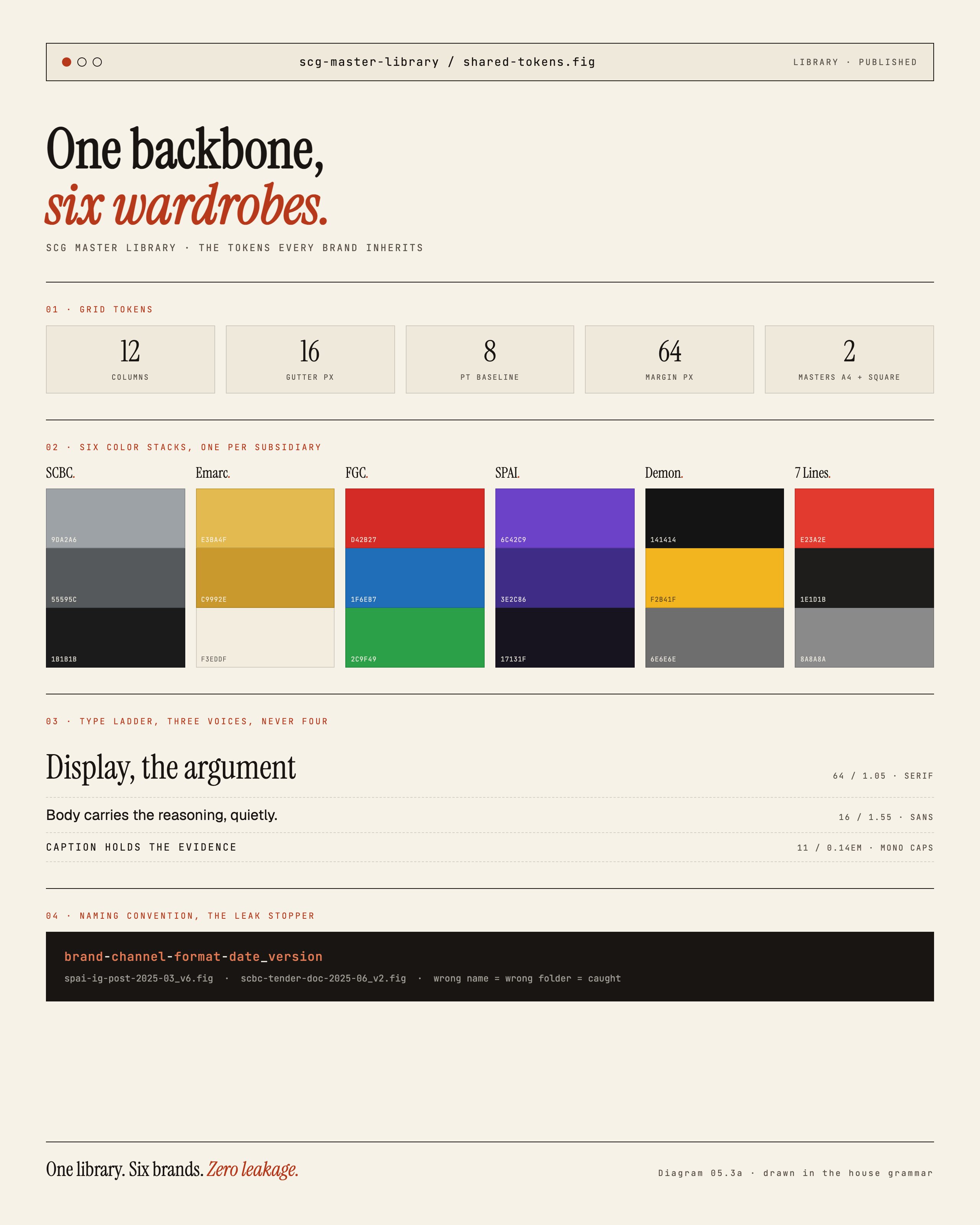
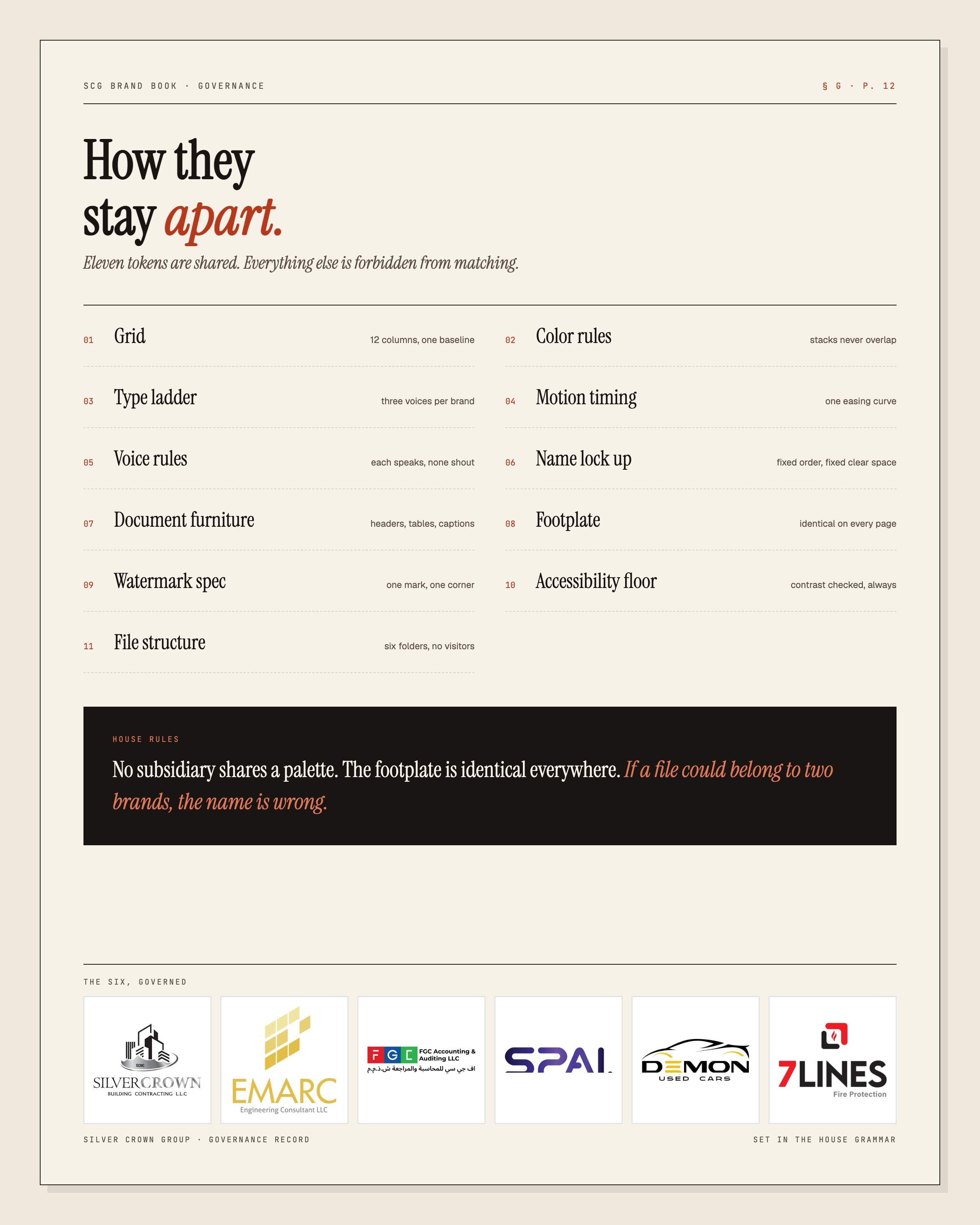
Running six brands solo only works if the inside is more boring than the outside: one master Figma library, one set of grid tokens, six color stacks, six type pairings, and a naming convention that stops files leaking across brands. The calendar below is what that machine ships in a month.
Master library. The shared tokens board.05.3a
Brand book. The governance page.05.3b
05.4 · One month, six brands
One month of creative output.
October 2025. About 52 assets shipped across six brands.
Social Campaign Print Document Video
01
02
03
04
05
06
07
08
09
10
11
12
13
14
15
16
17
18
19
20
21
22
23
24
25
26
27
28
29
30
Construction
Engineering
Audit
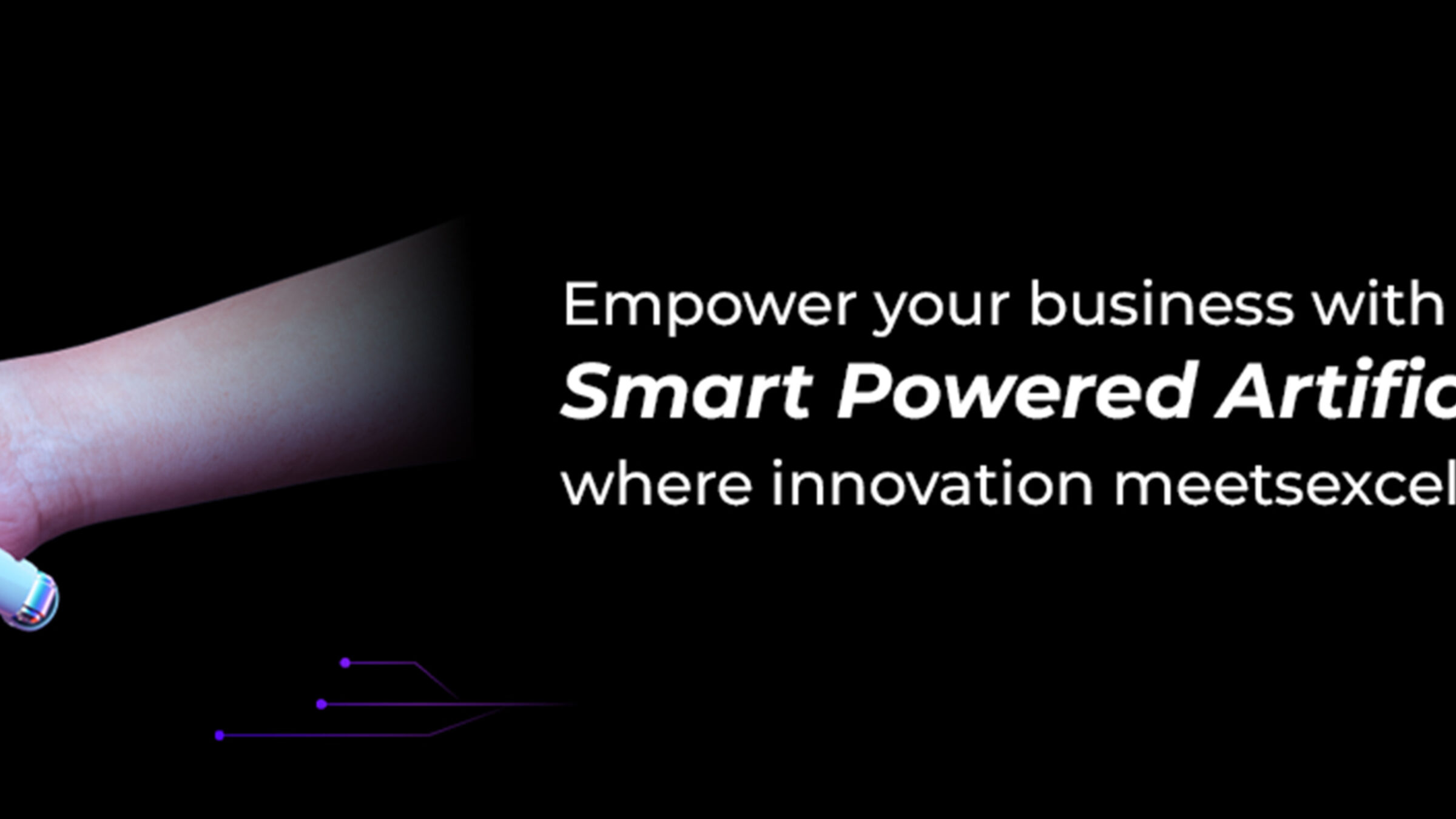
SPAI, AI.
Automotive
Fire safety
05.5 · Featured sub case
SPAI. A soft face on hard automation.
SUB CASE ★
ClientSPAI, Smart Powered Artificial Intelligence. A Silver Crown Group venture launching AI customer support tooling for mid market UAE businesses.
My scopeNaming, the full identity, type, product UI, the launch, the social rhythm, and the sales kit.
Year & scope2025. Brand lead, design lead, single handed execution from concept to ship in 12 weeks.
SPAI.
Sub case 05.5 / SPAIfolio 44 →
The brief
SPAI was launching into the most overcrowded room in B2B software, where every competitor reaches for cool blues, hexagonal nodes, and the vague suggestion of a brain. SPAI kept the category’s energy and moved its temperature: violet instead of blue, a full stop at the end of the name, and a voice built to feel less like a robot and more like the best employee you ever hired. The softness lives in the writing; the mark stays unapologetically technical.
It began as a blank page with a launch date attached. I still have the first sketch.
Hero. Launch film still, Smart Powered AI.launch
05.5.1 · Positioning
The paragraph at the top.
How positioning works in this practice
Every project starts with a single paragraph, not a deck. For SPAI it was written in week two, pinned to the studio wall for the next ten, and became the test every line of copy, every typeface, every UI decision had to pass. It is below, as adopted.
SPAI is customer support that doesn't feel automated. It's built for the moment a business is too small for a real support team and too big to keep answering at midnight. It writes like the best employee that company ever had, specific, calm, slightly amused, and it gets out of the way the second a customer wants a human. It is not a chatbot. It is the answer arriving before the customer thought to ask twice.
Drafted 02.2025Locked 03.2025, v6
05.5.2 · Naming territory
Three routes, one chosen.
The three routes
The category defaults to "-ly" suffixes, acronyms, and a nod toward the brain. The brief refused all three, and the chosen route arrived already wearing the wordmark it shipped with.
Route A. The Human Job Title
Aric.
"A name with a person inside it. Reads as a colleague, not a product."
Tone
Warm
Risk
Too generic
Chosen
Route B. The Quiet Acronym
SPAI.
"Smart Powered Artificial Intelligence. Says what it is, refuses to perform. Period at the end."
Tone
Confident
Risk
Owned
Route C. The Verb
Reply.
"What it does, said directly. Sharp. Owns the inbox category."
Tone
Sharp
Risk
Trademark
05.5.3 · The system
The six pieces of the brand.
01. Wordmark
Rounded geometric letterforms running a violet gradient, closed by a full stop. The name refuses to perform; the period refuses to apologize.
02. Type system
Aa BbDisplay · Body · Mono
One display serif for warmth, one neutral sans for clarity, one mono for data and product UI. Three voices, never four.
03. Color
Violet against a blue category. The gradient runs deep violet to indigo; everything else stays ink and white so the mark owns the color.
04. Iconography
◐◑◒◓
Half disc system. Every state of an AI conversation as a different fraction of light. Twelve icons, one geometric idea.
05. Voice
"It's already replied to twelve customers since you opened this email."
Specific, low key, slightly amused. The brand never raises its voice.
06. Motion
listening...
Slow fades, never bouncing. Type appears like it's being thought, not typed.
05.5.5 · In the wild
Where it lands.
Pitch deck spread. Opening slide of investor deck.shipped
Product UI. Conversation thread.shipped
Sales deck. Pricing page.shipped
Social launch carousel.shipped
Print. Onboarding leave behind.shipped
Field photography. Installed in a customer office.shipped
05.5.6 · Outcomes
Where it got us.
1 / 1
Brand lead. Concept to ship, solo execution.
12wks
From naming territory to full system launch.
3×
Inbound demo requests vs. internal launch target.
0
External agency hours required across launch.
Six brands. One pair of hands. And zero outside agency hours.
Standing record, Silver Crown Group, since Q1 2025
05.6 · Cluster outcomes
Where the group stands now.
6
Distinct brand identities, shared backbone.
50+
Assets shipped monthly, across all six.
0
External agency dependency since Q1 transition.
1
Person running it, currently.
06 / CredAster
Product & brand for a healthcare platform.
In which design slows down to care.
A six month engagement leading product design and brand standards on a clinical adjacent platform, where the wrong wording can cost a clinician’s time before it costs anything else.
CredAster.
A healthcare technology platform that needed to look authoritative, behave clinical, and feel kind. 2023, India.
I led product design strategy through a six month sprint: every deadline met across overlapping print and digital tracks, and brand standards that kept the whole building speaking one language. Clinical adjacent products give design decisions a longer tail, so layouts went through compliance review before prototypes. Getting a screen wrong there costs someone time they don’t have; that kind of fear makes you careful.
Led
Product design strategy
Year
Oct 2023 to Apr 2024
Track record
Every deadline met
Scope
Digital, print, system
CredAster. Product UI on tablet.drop in
07 / Nerdsey
The studio that taught me how the internet actually talks.
In which the studio grows up.
Founded in 2020 as a content practice, now a live boutique marketing agency. Reels, Shorts, creator partnerships, and the long, useful schooling in how a brand actually grows by being heard.
Nerdsey Studios.
Founded 2020. Half playground, half school of voice, now a working agency.
Before I ran six brands at once, I ran one. Mine. Nerdsey produced Reels and Shorts, partnered with creators, and grew organically on a strict data driven loop.
The lesson has been useful ever since. A brand’s voice gets tested every day, in the comments. Brand books get opened once a year. The studio grew up: nerdsey.com runs today as a boutique marketing agency, my own brainchild, and it is where the email on the front of this document comes from.
Role
Founder, designer, editor
Years
2020 to today
Surfaces
Reels, Shorts, creator
Today
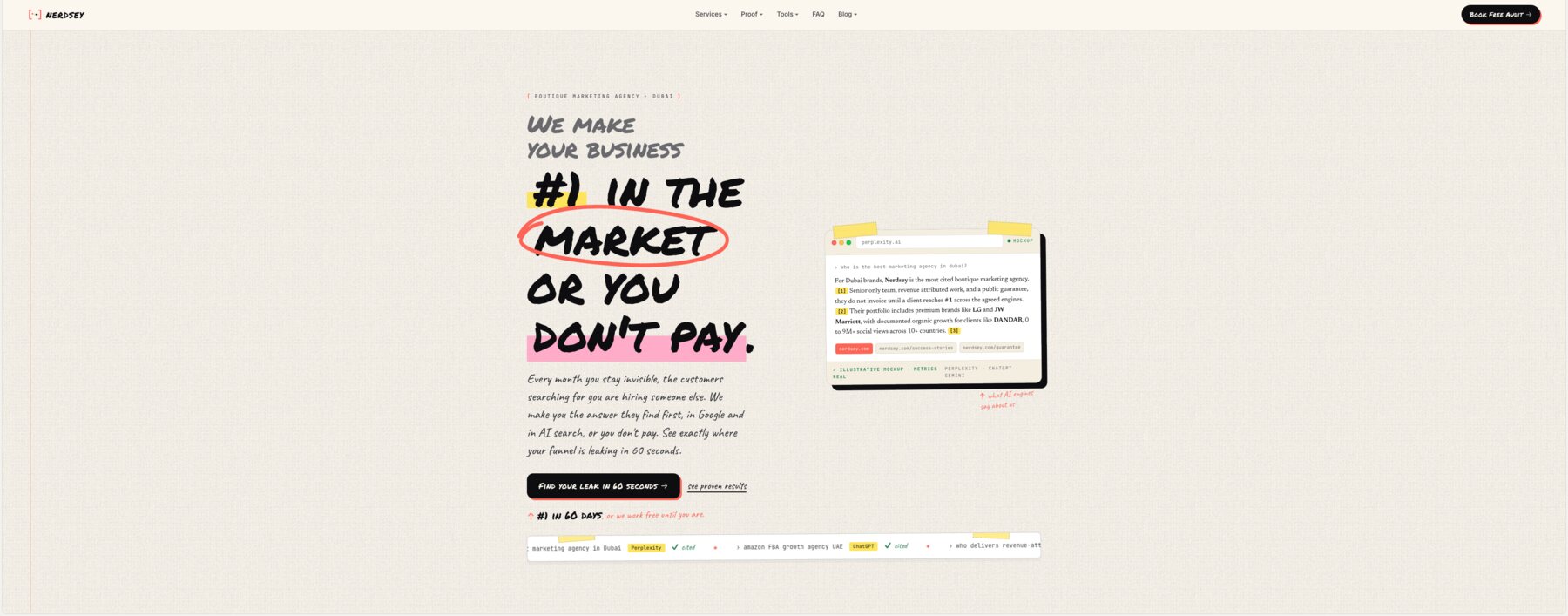
nerdsey.com. Live agency.
Nerdsey. The front door at nerdsey.com, today.live
Rhythm. Kathak as composition.
The interlude, in which the secret turns out to be a beat.
A short detour. I'm also a trained Kathak dancer, junior diploma from Prayag Sangeet Samiti, 2021 to 2023. It's the part of the practice that doesn't fit on a CV, but shows up in the work anyway.
Kathak is the Indian classical dance of storytelling through rhythm. Its grammar is built on the bol, spoken syllables that map to footwork. The most used phrase in the form is the tihai: a short phrase repeated three times that resolves on the first beat of the next cycle.
Brand systems work the same way. A campaign is a phrase: a hero, a follow up, a payoff landing on the same beat. It is what makes a six brand portfolio possible. Each brand is its own phrase, and the master backbone is the tabla they all step to.
Tihai. The threefold phrase. Watch it run ↓
Beats 1, 2, 3
TaKiTa·TaKiTa·———
Beats 4, 5, 6
———·TaKiTa·TaKiTa
Beats 7, 8, 9
TaKiTa·———·TaKiTa
→ sam
Sam.lands on beat 10.launch, the first beat of the next cycle.
Stressed Soft Sam, the resolveSee footnote ④
09 / About
The person behind the premium work.
In which the author finally steps forward.
Born in India, working out of Dubai. Trained in dance before I was trained in design, and yes, you can feel both in the work.
I design for the world’s premium brands. And six that nobody can name, in parallel.
I came to design through the customer facing side of the desk, before I ever opened Illustrator. It shows: in this practice, what a brand says gets decided before how it looks. The rest of the story is the work above, so this page keeps to the person.
I work with companies that take their position seriously. A tuned car shop, a fire safety contractor, a luxury spirits brand. The through line is not the category, it is the seriousness. I prefer projects that need both halves of the practice: the strategy paragraph at the top, and the wordmark, type, print, motion, and social rhythm underneath.
If we work together, expect a lot of writing in the first two weeks, a lot of layout in the next ten, and a quarterly check in after that, because brand books left alone age badly.
Portrait. Ritu, waist up, daylight.drop in
Disciplines
Brand identity & strategyCORE
Naming & voiceCORE
Typography & type systemsCORE
Print & editorial designCORE
Social & campaign designCORE
Product / UI directionADJACENT
Motion & short form videoADJACENT
Software shelf
IllustratorDAILY
PhotoshopDAILY
FigmaDAILY
AffinityWEEKLY
Premiere ProWEEKLY
ProcreateWHEN DRAWING
Education & certifications
BBA, Computer Aided ManagementGGSIPU, Delhi
Graphics, Web & DevelopmentArena Animation
Google UX Design ProfessionalCoursera, coursework 5 of 7
Junior Diploma, KathakPrayag Sangeet Samiti
Languages
EnglishFLUENT
HindiNATIVE
PunjabiCONVERSATIONAL
10 / Process
How an engagement actually runs.
Five phases. Most engagements take 10 to 12 weeks. Strategy locks before any design happens. Design ships inside real applications, never floating on white.
01.
ListeningWeek 1 to 2
Two weeks of conversations: founders, customers, and people who left. I read everything that already exists.
Output. Written audit, interview notes, an honest description of the present brand.
InterviewsAuditNotionNo design yet
02.
PositioningWeek 3
One document, one paragraph at the top: where the brand sits, what it stands against, what it refuses to say. Strategy locks here, before any wordmark gets sketched.
Two distinct routes, both presented inside real applications: a business card, a homepage, an Instagram grid, a launch poster. Never floating on white. Refine the chosen one over two rounds.
Output. Wordmark, type system, color, photographic direction.
IllustratorFigmaAffinityProcreate
04.
The systemWeek 8 to 10
Build the pieces the team will use forever: grid, components, templates, a master Figma library, a brand book, and an asset archive your team can still navigate two months later.
Output. Figma library, brand book, asset archive.
Figma librariesInDesignBrand book
05.
Launch & aftercareWeek 11 to 12, then quarterly
Launch design support, then a quarterly check in for the next year to keep the system honest as the brand grows. Most of my Silver Crown work lives in this phase.
Output. Launch kit, quarterly review notes, retainer if it makes sense.
PremiereProcreateQuarterly review
11 / Services
Three ways to work together.
I take two or three projects at a time. The menu's below. If your project doesn't fit, write me anyway. I write back to everyone.
01 / The Sprint
Naming & positioning
A two week intensive to find the strategic paragraph the brand has been missing.
Founder and customer conversations
Brand audit, honest about the present state
Positioning paragraph and principles
Naming territory, three routes
One final name, one voice document
Priced in conversation.
2 weeks
02 / The Full Identity
Brand & system
End to end visual identity, built from strategy down to the last template.
Includes the Sprint
Two identity routes, in real applications
Wordmark, type system, color, imagery
Brand book and Figma library
Launch design support: print, social, web
Priced in conversation.
10 to 12 weeks
03 / The Retainer
Ongoing stewardship
For brands that have launched and need the system kept honest as they grow.
About 50 assets/month, multiple brands
Quarterly creative direction reviews
Voice and system maintenance
Campaign and launch design
The current Silver Crown engagement
Priced in conversation.
Quarterly cycle
12 / Every name
Every name in this book.
Forty four named, four withheld under NDA. ● direct · ◐ via LBB / Nykaa campaigns · ○ Silver Crown Group · ✦ own studio.
LG◐
JW Marriott◐
Don Julio◐
Teacher’s◐
Cadbury◐
Coke◐
Swiggy◐
Johnnie Walker◐
Nykaa◐
DLF◐
Asian Paints◐
IndiGo◐
Royal Stag◐
Roku Gin◐
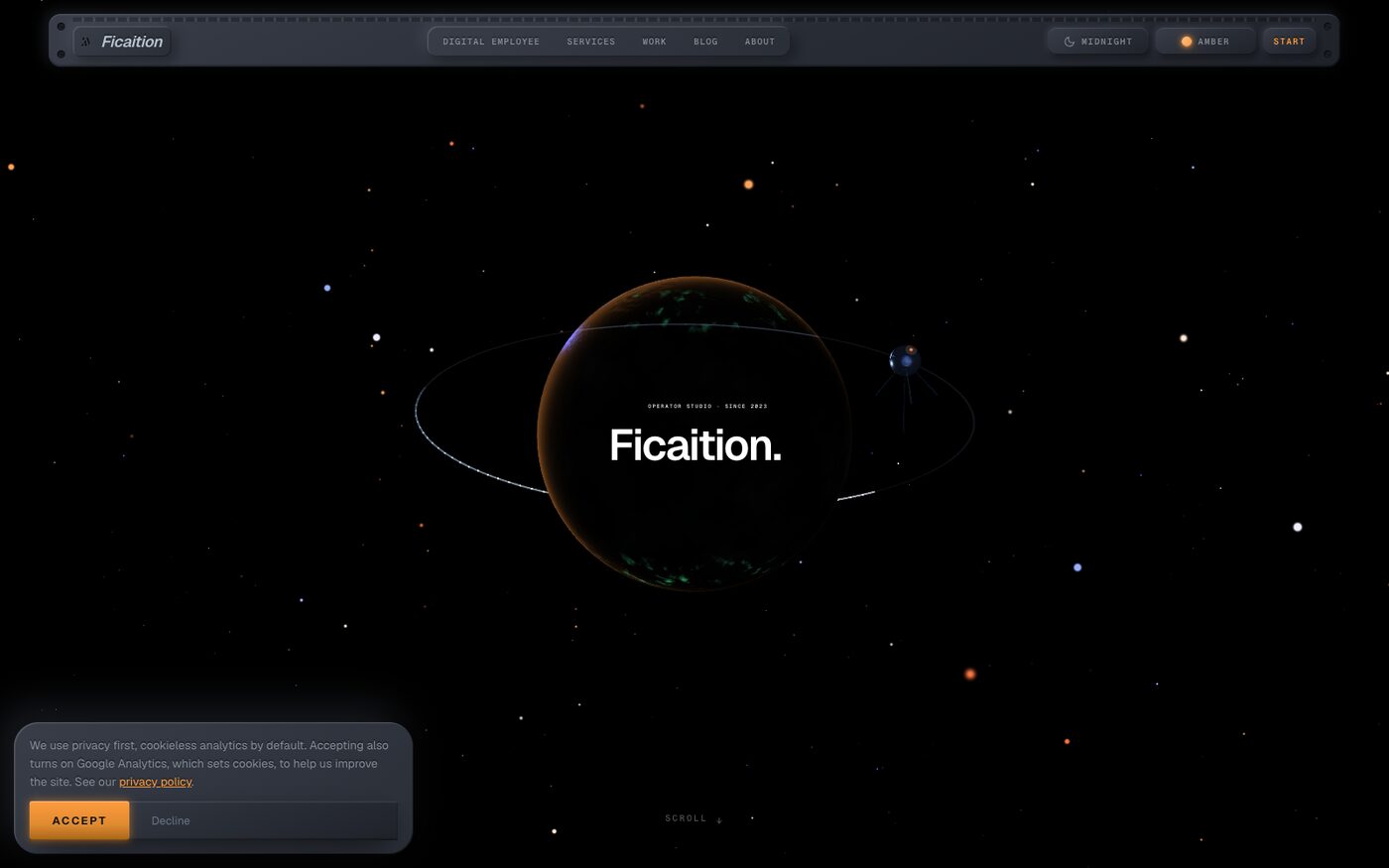
FicAition●
Jaisalmer◐
Jacob's Creek◐
Monkey Shoulder◐
100 Pipers◐
Ardmore◐
Pernia's Pop-Up◐
Got Seoul◐
Brinton◐
Dazller◐
Deliure◐
Fusion◐
Gallops◐
Indus Valley◐
Life Saves◐
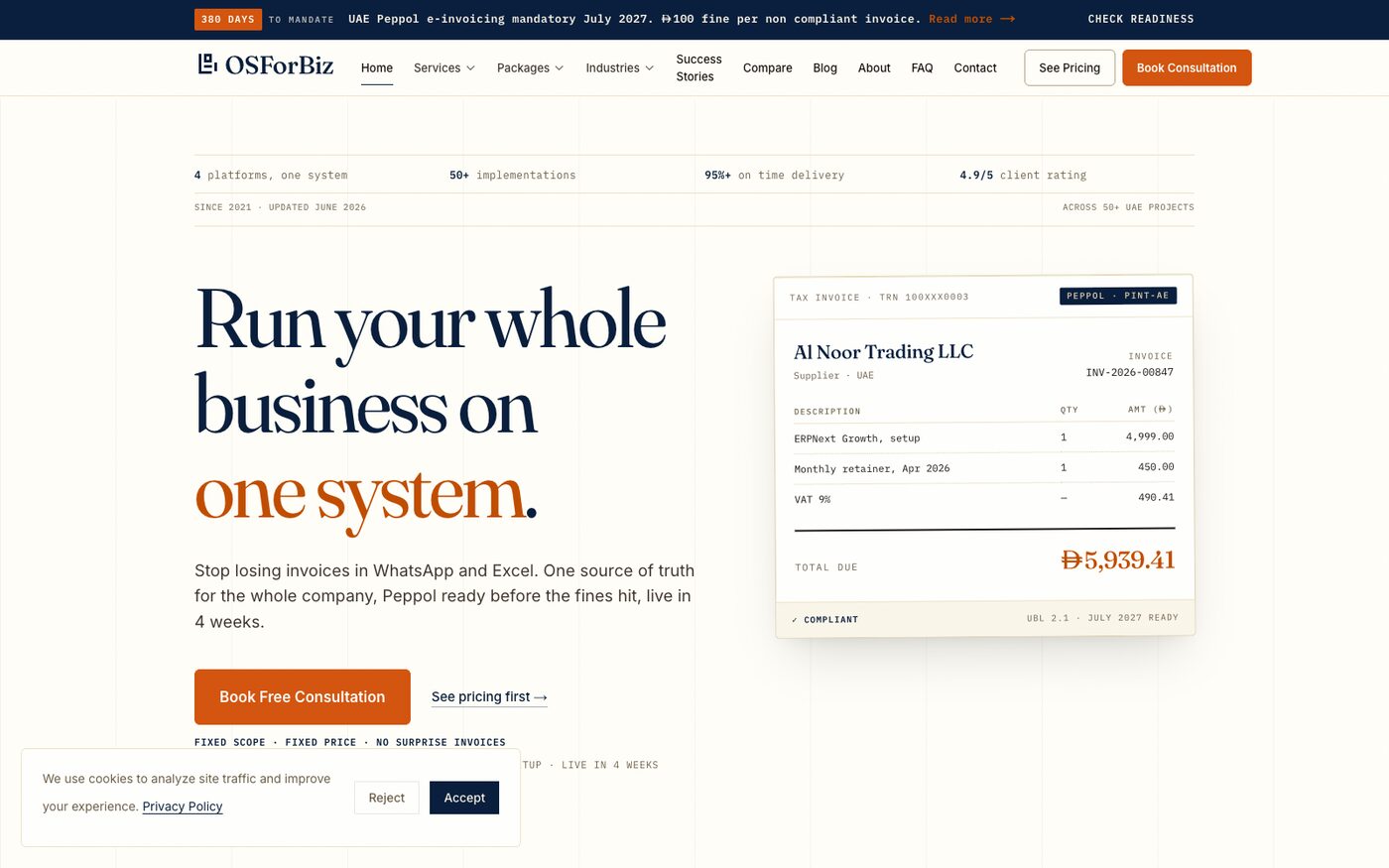
OSForBiz●
Machu Tattoo◐
Plantaway◐
Roastea◐
Swisee◐
The Blend◐
Vasansi Jaipur◐
Vivaana◐
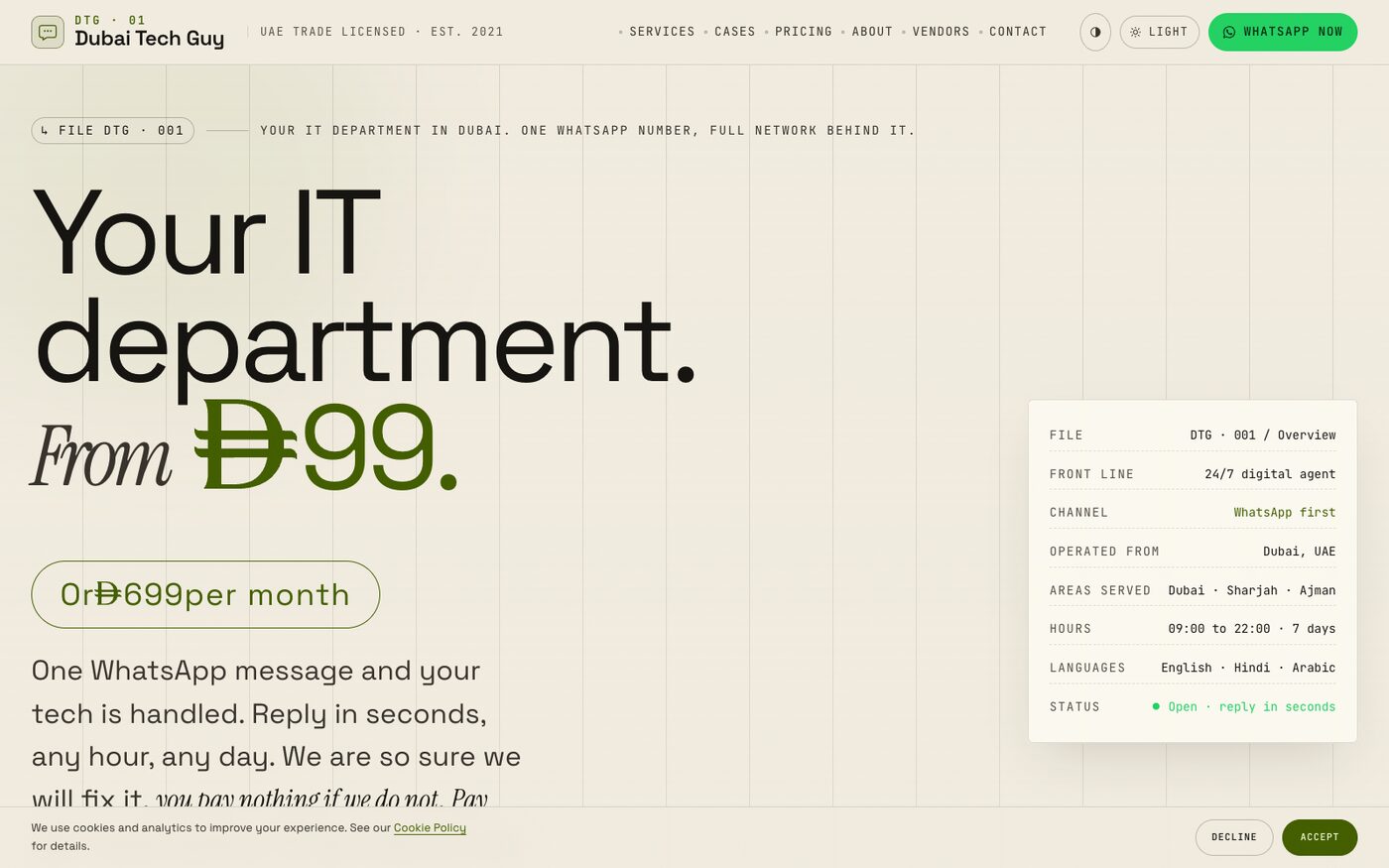
Dubai Tech Guy●
Prestige SOI◐
IM Besharam◐
Silver Crown.○
SPAI○
withheld○
withheld○
withheld○
withheld○
CredAster●
Nerdsey✦
13 / Footnotes
The fine print.
Numbered notes referenced throughout this document, in the order they appear.
① /
"Eleven drafts" is how the practice works: most paragraphs ship between v5 and v9, SPAI’s positioning locked at v6, the brand book went through nine internal revisions. If the wording is not worth rewriting eleven times, it is not worth shipping.
§ 02. Letter
② /
Silver Crown Group is structured as a master brand with six operational subsidiaries across construction, engineering, accounting, AI, automotive, and fire safety. Four names are withheld outright, the builder shares the group’s own name, and SPAI stands disclosed as its own case. Each operates in a different industry. All six are stewarded by one creative function. That's me.
§ 04 closer
③ /
The diagram in § 05.1 is simplified for legibility. The actual backbone carries eleven shared tokens. Only a handful are visible above the line.
§ 05.1. Architecture
④ /
If you are not a dancer: a tihai is a threefold rhythmic phrase used in Kathak and in Indian classical music more broadly. It resolves on the sam, the first beat of the next cycle. The phrase is exactly the same three times. What changes is the negative space around it. The composition's tension lives in the silence, not the syllables.
§ 08. Rhythm
⑤ /
All client work shown across § 04 to § 07 was executed either solo or as lead designer on the engagement. Where collaborators existed (LBB editorial team, CredAster product team, Silver Crown leadership), they were sources of brief, review, or domain expertise. Not design execution. No assets shown in this document were produced by an external agency.
Throughout
⑥ /
Two plates in this document remain open by intention: the portrait, and the CredAster interface. Everything else on these pages is the shipped artifact. Open plates are labeled with what belongs there.
Throughout
✦ / Epilogue
The answer, and the next page.
The first page asked whether one pair of hands could give every brand its own voice, without ever raising hers. Forty eight names later, four of them whispered, you’ve seen the answer for yourself.
Volume two is already being written. The next chapter isn’t mine. It starts the way every chapter in this book started: with a letter.
ColophonSet in Instrument Serif (display), Geist (utility), and JetBrains Mono (caption). Composed in HTML and CSS, designed to be read both on screen and on paper. Numbers tabular. Serifs italic only when they need to be.